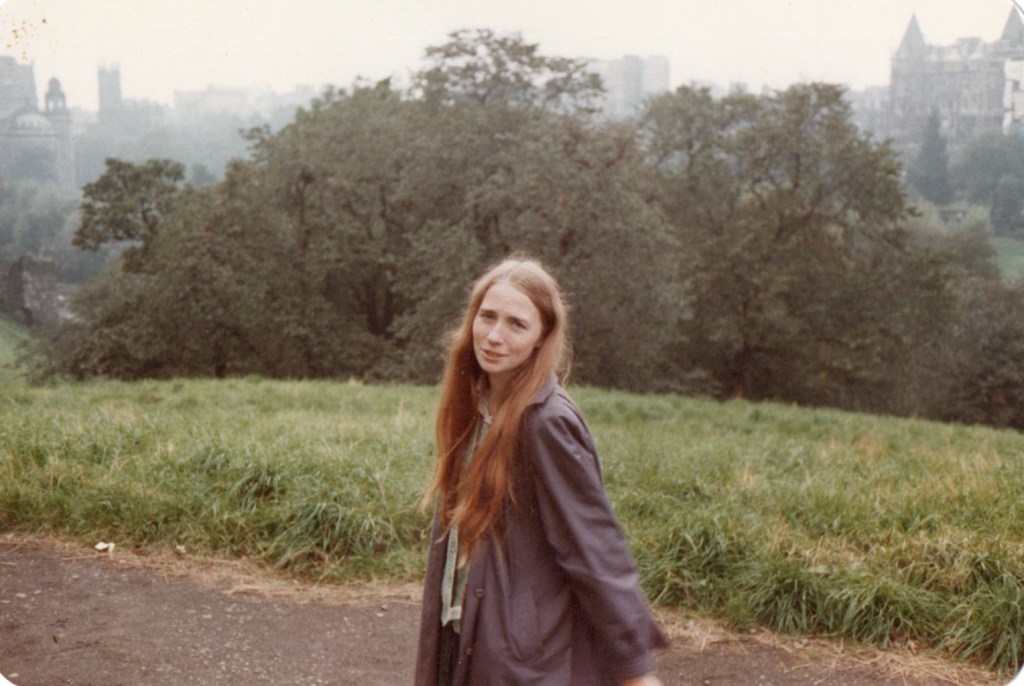
• Although I would soon turn 16, I still found the journey to France daunting – travelling solo for the first time by plane and then getting lost on the train as, laden down with bags, I attempted to make my way by metro and train to the south Parisian suburb Athis-Mons where I would stay. 

    I was very lucky to be housed at the weekends with a lovely divorcee teacher from the school which happened to be located close to her property. She had three kids, including Etienne, two years younger, who was to become a good friend. We bonded on music, films and football. One treat was the Sunday afternoon when her ex would come to visit, bringing tasty profiteroles and other pastries from some posh boulangerie. 

    Meanwhile the actual school seemed massive to me, coming as I did from an upper school consisting of 200 pupils. There must have been almost 2,000 students, all boys, ranging in age from seven to nineteen. And everybody appeared to smoke. So I started as well, albeit only a few cigarettes a day. 

    Naturally, I found it hard to adapt to French lessons, writing in French and penning philosophy papers when my vocabulary was pretty sparse, but I got there in the end. Translating from Ancient Greek and German into French also took a while to get used to. My maths and understanding of chemistry and biology also improved.

    However, there was another challenge that I hadn’t expected. I ended up sharing a room with a French guy Michel (the name has been changed) who would constantly mock me. That was not the worst of it though. One evening every week a friend of his from Guadeloupe would pop in late at night and they would take it in turns to beat me. 

    I kept quiet owing to the threats they made if I were to dare say anything. As you can imagine, the frequent unprovoked attacks overshadowed the whole experience. Totally demoralised after three months , I let Etienne know. After he told his mum, I was transferred to another room with a really friendly kid Xavier. It taught me a lifelong that speaking out about a transgression, however humiliating it might feel at the time, can have a positive outcome.

    This is when I actually started to have fun and appreciating the same tracks that would be blasted out every morning to wake everyone up before breakfast: the greatest hits by 10CC: Rubber Bullets, Arts for Arts Sake, I’m Mandy Fly Me, I’m Not in Love and the band’s number one hit from September 1978 Dreadlock Holiday.

    I also wrote the lyrics to a number of songs at the request of a young sports teacher for his band. He was most complimentary about one song I wrote called Geranium Blues about a drug addict.

    I took the end-of-years exams and passed them and was offered the chance to move up to the next class and take the baccalaureate. I must admit that I was tempted, but had other plans. 

    The year ended with a moment of true karma. Michel had a horrific motorbike accident. Luckily he recovered. He sought me out and apologised profusely for what he had done. The accident had led him to reevaluate the past. It was that rare instance of seeing how trauma can have a positive impact on an individual and has left an indelible impression on me to this day.

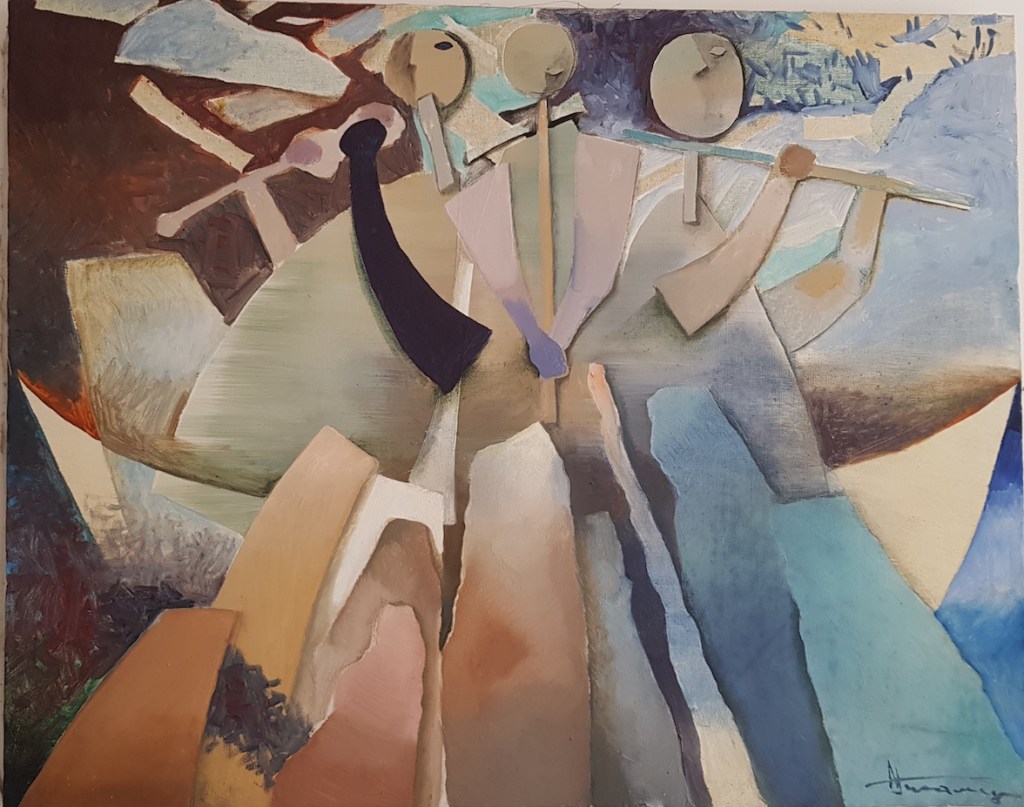
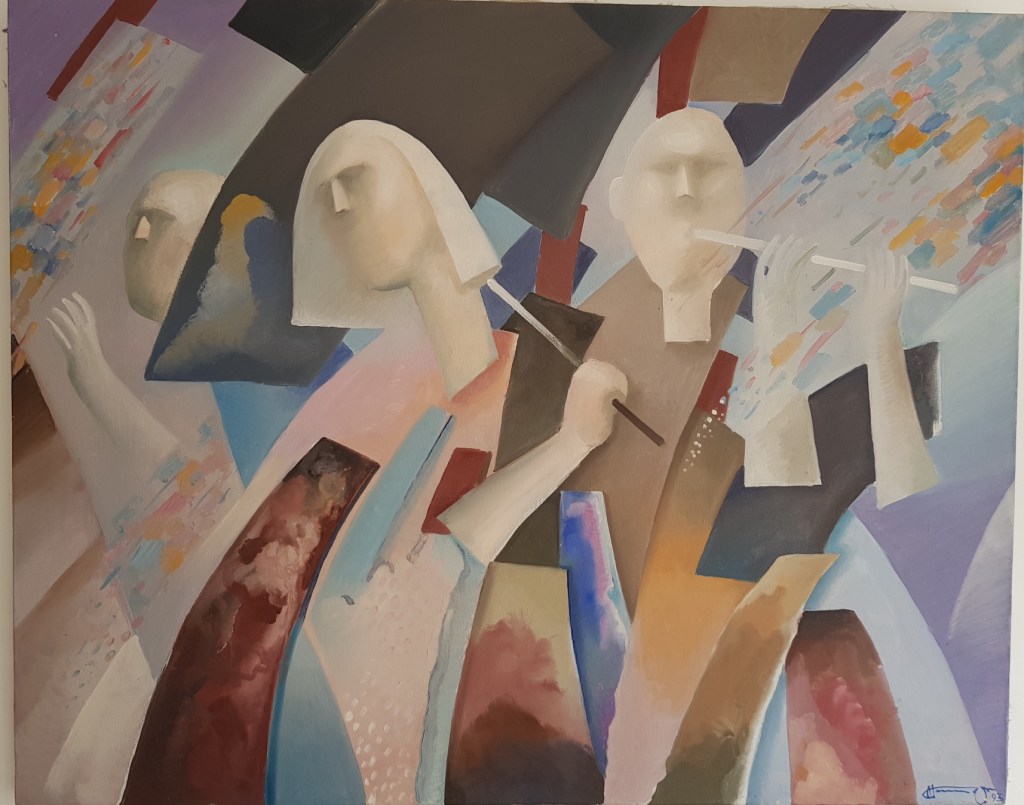
    Another painting by the Kazakh artist Manas Kisamedinov.
    Leave a Reply

  • The year 1979 is always connected in my mind to the only time I had a serious political disagreement with my parents – they had decided to vote for the Conservative Party led by Margaret Thatcher for the first time in their lives. They believed that she truly wanted to change the country for the better following the sanctimonious words she uttered outside Downside Street. They were to regret it as she caused havoc throughout, froze my dad’s salary and started a decade where she decimated society, and conducted a foreign war solely to ensure electoral success, a cheap and amoral political trick that is unfortunately so common these days. Another crime was the handover of council houses to tenants with no strings attached. 

    Don’t get me wrong. I realise that this move opened the door to home ownership to a significant number of people in all parts of the country who would never have been able to buy or change their lives so radically without this move. On that level it was a positive step and simultaneously a master stroke, enabling the tory party to control the economic narrative for decades to come. 

    However, the reform had one major drawback: the indicative short-termism of the policy with no attempt whatsoever to contemplate the housing crisis we see now more than 50 years later.  Now there were far fewer council properties for those unable to buy a property or rent on the private market. Moreover, there was no onus whatsoever on construction companies to allocate a proportion of brand new builds as council housing. The tory party didn’t make any such demand and didn’t stipulate preferential treatment for UK residents going forward. As a result,  there is a shortage of cheap accommodation available today, property prices have soared and nationalism has reared its ugly head, with Brexit one direct consequence.

    Anyway, I felt very lucky to be a year younger than everybody else when I started my A levels at the age of 15 in the autumn term running until late December 1979, with Pink Floyd’s Another Brick in the Wall (Part II), aptly describing the angst kids felt around that time. 

    Study-wise, as well as Ancient Greek which I loved and French, I had opted for German, having completed an O level in business German and obtained a B. At the time I had agreed with my parents to drop back a year on completion of six months of studies in the “Second A” stream at the school in Paris. 

    Under the French Baccalaureate, students are streamlined early, in line with their abilities and/or in accordance with underlying academic drivers. The A stream is focused more on literature, philosophy and foreign languages, B on social sciences, languages and mathematics, and C on science and mathematics. As maths was never my strong point, it had to be A. 

    I was looking forward to a new beginning. However, the first few months of 1980 turned out to be far more harrowing than I had expected. But that is another story.

    Painting by Kazakh artist Manas Kisamedinov (1992)

    Leave a Reply

  • First of all, apologies to subscribers and readers for the gap between blog entries. I suppose I could attribute the delay to the holiday season or a packed schedule in early January. The truth is, I penned this text last summer and was loathe at first to open up fully. However, who knows, it may prove helpful to someone out there! If only I had known the great confidence coach Russell Edwards back then! I would definitely turn to him now in such circumstances.

    After the harrowing experience of Chris C and the adverse psychological impact at the time and for years to come, I want to turn to brighter planes. One of the major joys of childhood was the annual foreign holiday at the end of school in late July for a few weeks. 

    My mum and dad would always take the family camping to Europe – it was the cheapest option. Owing to the foreign exchange controls reinforced after the end of World War II and updated by the Labour Government in 1966, remaining in place until their abolition in 1979, a family could not take more than 50 pounds sterling in currency and 15 pounds sterling in cash. While that money went much further than today, naturally, it still implied the need to bring a considerable amount of tinned food for cooking on a gas stove in camp sites. 

    It was a good way to see Europe, with visits to towns primarily in France, Germany and Italy. On one occasion the car broke down and insurance covered a week at a posh hotel resort in Austria. In general though we would travel through France on our way to spend two weeks not far from a beach near Cesenatico on the Adriatic coast of Italy. 

    One of the benefits for the kids was getting to spend time with mum and particularly dad away from his study with us in the fresh air, meeting new people, as well as practising French and basic Italian from playing table tennis and table football.

    On the way back home from Italy in 1978, we stayed at a campsite south of Paris where horses and pigs would come sniffing up to the tents and you would get fresh milk from a family farm down the road. There was also a wooden outdoor building where I spent most the free time playing table tennis and met a stunning blonde called Isabelle Barillon. I was so timid, but felt confident enough playing the game. Then we corresponded for a while. She sent a me a postcard the following February, saying that she loved me. On the verge of turning 15 and finishing my O’ levels early in July that year, my dad suggested I start my A’ levels and then study in France for six months from January 1980 at a boarding school during the week and with a family at weekends. Then I could drop down a year and complete my A levels over two years. Naturally I said yes.

    I went for an interview in Paris and was accepted. Then I went to meet up with Isabelle, spending a wonderful time at the Pompidou Centre and walking around France’s capital, but was too shy to kiss her even though Isabelle brought me back to her room. Naturally she broke it off shortly afterwards. I regret to this day the crippling shyness that I felt based on personal insecurity and a sense of inadequacy and a failure to read the mood. Such a lack of confidence affected other areas of my life, but I learned to cope over time. I didn’t know any confidence coaches back then!

    However, I did see Isabelle again a few years later on my return from a summer job in the south of France when we spent an enjoyable afternoon in a massive local subterranean bar in Paris. But that is another story. 

    However, I don’t regret the six months studying in France, which were admittedly hellish at first. They changed me for good. 

    Leave a Reply

  • Watching Elvis Costello and the Attractions at the Hammersmith Odeon in 1977 was no doubt one of the highlights of the period, going to the concert together with John and Chris. As well as the concert, we would hang out at each other’s places during holidays, play tennis where they both always won, or table tennis at my house where I would come out on top, or snooker at John’s abode where he naturally ruled the roost. Another friend of the time Andy Mangion would join us now and then. After studies at Cardiff University, he moved on to build up and run an empire of student properties in the city where he lives with his lovely partner Ruth and their two daughters. 

    Back to school. I gradually recovered from the ignominy of coming bottom of the class or even the entire year as I started studying, albeit less than I should have. Other than languages (Latin and Ancient Greek, French and Business German), I enjoyed English and history, was less fond of maths and utterly hopeless at physics. In terms of sports facilities, other than outdoor football, the appearance of table football at school in the sixth form was a godsend. I was at one point included in the rugby team as a hooker owing to my height or lack thereof at the time for a Saturday match, but managed to limit to that experience to one trip, in part no doubt due to the expletives I unleashed in the scrum.

    While that day was far from enjoyable, my worst experience occurred during a class on religious education when I was seated for some reason next to Chris C. I don’t want to disclose his surname here in case he has changed for the better. We had never been friends and didn’t mix at all. On that occasion he told me that one day when I was happy and married, he would find me, come to my house and shoot me. 

    I was shocked at the time and still shudder to this day, remembering the moment when he looked deep into my eyes and emitted these words coldly, with an expression of utter hatred. Clearly his inexplicable and despicable conduct left an indelible trauma as I still check the front door on occasion more than 35 years later and have done so for decades. I am unable to fathom why anyone in fact would say something like that. Looking back, I can only assume that Chris C. might have been suffering some form of abuse at home or elsewhere, or had done so in the past. I am amazed at the cruelty of kids sometimes. 

    Childhood mockery was irritating back then, but more indicative of the intellectual capacity or puerile state of the individuals concerned, who would blare out at me either “boom, boom”, or “Basil, Basil”. At the time Basil Brush, a show about a fox in a glove puppet with attendant ventriloquist, was popular in the UK. He would make what was apparently a joke and shout “boom, boom” to rub it in. Another series that was actually amusing  – Fawlty Towers about an unpleasant and rude hotel owner called Basil Fawlty played by John Cleese – also aired from 1975-79. He is constantly subject to onslaughts from his wife played by Prunella Scales, searching for him and saying repeatedly, Basil, Basil. Other nicknames would come after six months in Paris, another period of peripeteia. 


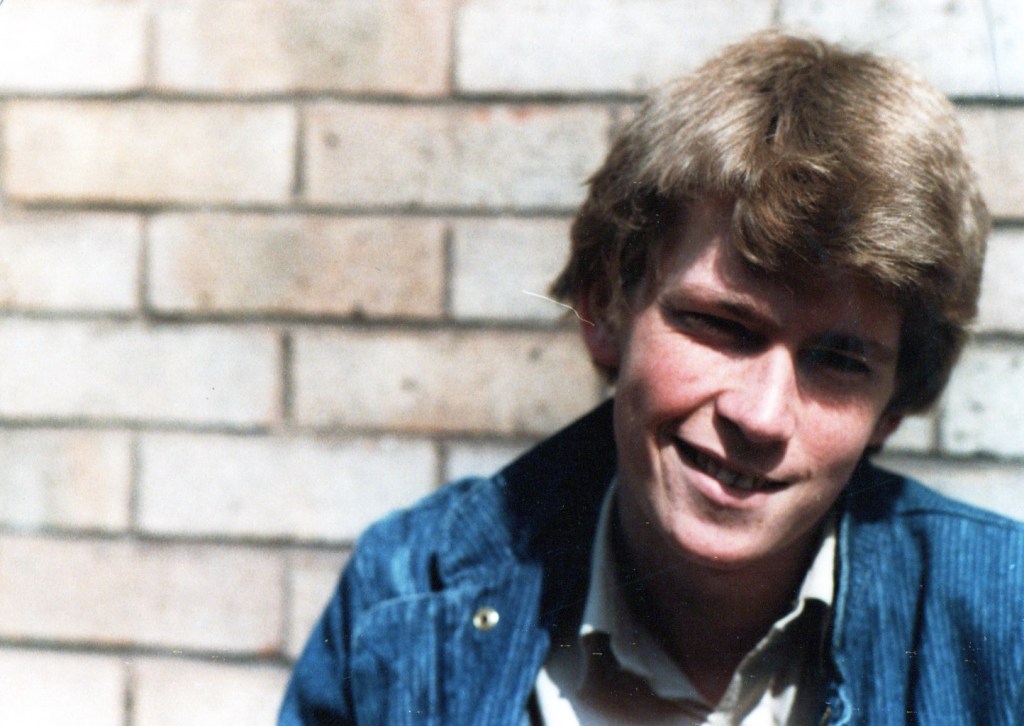
    This photo is from some point in my adolescence. No date, I am afraid.

    Leave a Reply

  • Apart from an explosion of musical creativity from punk to ska,  the late 1970s in the UK were marked by significant political and economic upheaval, the Winter of Discontent due to strikes and a sense of insecurity. 

    My dad had been becoming increasingly worried about the left-wing bent of the Labour government of the day and even contemplated a move to New York, working initially there as a painter and decorator, something he was good at, as I mentioned previously. However, it never came to that. 

    No doubt, owing to my father’s influence and the world existing back then in the 1970s and early 1980s, my teenage life revolved around books, especially in the long dark winter evenings, with a constant desire to read attributable to the lack of alternatives, other than studies. I also enjoyed outdoor football, tennis and table tennis, which all came to supplant my interest in chess.

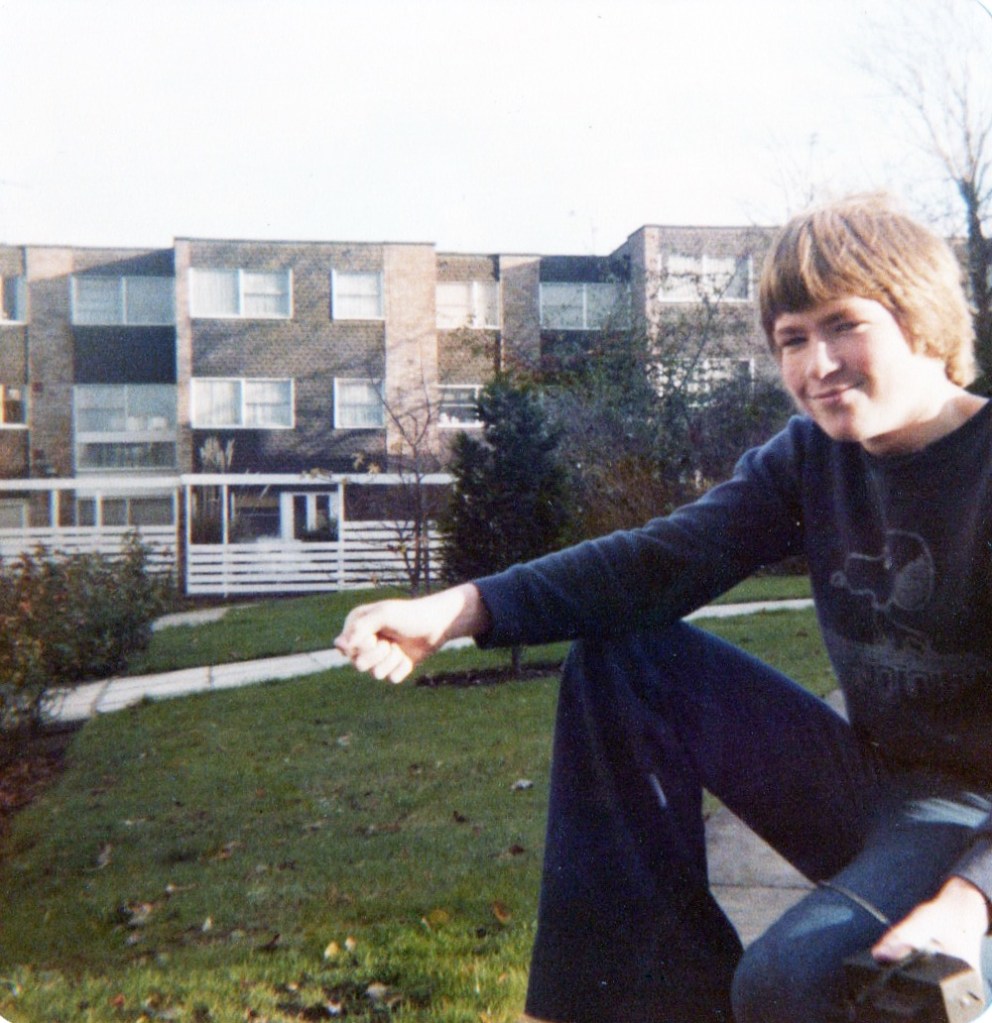
    Not a favourite photo from that time. 

    You have to understand that I grew up at a time in England where there were only three TV channels and the daily programming for children ran from 4 to 6 PM. I remember fondly some cartoons – Scooby-Doo, Where Are You!, Top Cat and the Wombles, and other kid shows such as Grange Hill and The Tomorrow People, whereafter I would be expected to go up to my room and do my homework or stay out of sight and keep myself preoccupied. Initially it was the latter.

    Dinner would be late, timed to coincide with my dad’s return from work at the School of Oriental and African Studies, where he was now a Professor of Indian History.  If he came back by 9 PM, I would get to catch half an hour of the BBC news before being ushered back upstairs.

    As is the case of most people, I never really liked school. The level of indoctrination and inevitable bullying, especially as the new kid on the block aged 13 where everyone was 14. 

    Joining in the final semester of the year and juvenile in more ways than most, I found myself at the bottom of the class. 

    That shame, however, was overshadowed by another event at a morning assembly in late June. Several people were whispering, but for some reason only I was picked out. I was told to come to the front and then publicly caned. It had never happened to me before. I assume that the priest meting out the punishment derived some sadistic pleasure from lashing out. 

    However, I was lucky not to suffer worse. Subsequently, several teachers – all priests – from the school were convicted for sexual abuse of minors, a disturbing and harrowing topic, something that should never happen, especially not at a place preaching to kids about how to live their lives. I am glad they were caught. Luckily neither I, nor any of the pupils I studied with back then were affected directly.

    I recently discussed this and other events from those times with two good schoolfriends of mine Chris Haniff and John O’Brien. They stood out in that they already had a vision of their futures. Chris planned to become a professor of physics and John dreamed of becoming a doctor. 

    They both achieved their goals. Chris teaches at Downing College, Cambridge, and also leverages his knowledge to assist with the planning, design and implementation of astronomical interferometers (telescope arrays – yes, I had to look that up on Wikipedia). Chris also takes on another role that I would prefer: Fellows’ Steward, responsible for social arrangements, including the sourcing and serving of wines.

    Meanwhile, John had to persevere to reach his goal. Back in the 1980s, when only five per cent of the population went to university, it was particularly hard to be admitted to study medicine in London unless your parents were doctors. So John did a degree in pharmacology at King’s College, London and then studied medicine at the University of Aberdeen, where he also met his other half Fiona. They both ended up working as GPs in Portsmouth, before they took on another challenge: retaking their medical exams in order to be able to work as GPs in Vancouver where they now live.

    Sorry, once again I have been sidetracked – I will return to school in the next instalment.

    Leave a Reply

  • Harold Wilson resigned in early 1976, to be replaced by James Callaghan who would lead the Labour Party into the 1979 general election. Meanwhile the following year ushered in the Silver Jubilee, technological change, with the emergence of personal computing, in particular Apple (I work on iMacs to this day), as well as the launch of Star Wars: A New Hope, the spread of punk and the Sex Pistols, David Bowie’s continuing rise with Heroes, ABBA, Donna Summer, the Clash and Elvis Costello, the latter to represent the first concert I would attend at Hammersmith Odeon.

    The year 1977 also marked a new start for me, as we moved after the spring term from Hampstead to an estate in Ealing not far from the next school, Saint Benedict’s.

    However, I now realise that I cannot put my early childhood to bed just yet, as a previous dwelling in Windmill Hill, Hampstead, comes to mind. The rooms were small.  I shared a room with Adrian. It was situated not far from an Everyman Cinema which screened old classics, including a couple of Humphrey Bogart films I loved – The African Queen and Casablanca. 

    A fair distance from The Hall (primary school), I would take a bus and be picked up on most occasions by my sister Helen. She looked forward in particular to Mondays as I had cookery class, making omelettes, flapjacks, rice crispy cakes and other tasty morsels, in the hope that I would share the ones I took home with her. Unfortunately, on most occasions I would say no, saving them for my mum, who would naturally give some to Helen behind my back and pictured here.

    She has been a constant in my life, caring for me in particular when I was an infant and growing up and I am forever grateful, returning the favour over the past decade or so. She is a better sister than I could ever imagine. I suppose religion was going to appear at some point: she would also accompany me to the early 8:00 AM mass on Sunday at the local church where I was an altar server. I also played football with the other servers sometimes.

    However, my parents were the real bulwark of the family. Not only that, in their spare time they worked as a team on each property, painting and wallpapering them, with my dad also doing the odd carpentry job at home, in order to be able to trade up to a bigger property in a cheaper location, such as 35 Rudall Crescent, a larger house near Hampstead Heath. Here my dad also created a basement flat with a separate entrance for my late brother John, already in his 20s who had been good at maths and had moved into stockbroking.

    My dad was thrilled to sell the house to a well-known classical guitarist John W. who allegedly assured him that he planned to bring up his family there for a long time. Trusting him, my dad offered a significant discount that he could ill afford on the price. However, the musician would go on to sell the place four months later at a considerable profit. One of my dad’s favourite maxims “Life isn’t Fair” comes to mind.

    However, there was nothing to be done. Now on with the move to Ealing, a new school and good friends there, as well as an unexpected enemy who blighted my future for years to come. But that is another story…

    Leave a Reply

  • The launch of Top of the Pops was a key event for many young people in 1964. It also coincided with the election of the Labour Party led by Harold Wilson, which ushered in a period of low unemployment and prosperity, albeit at the same time as a balance of payments crisis.

    Known as the swinging sixties, the decade ushered in an era of freedom of expression, hedonism, modernity and creativity, with music to the fore – the Beatles, the Rolling Stones, the Who, the Kinks, the Animals, the Beach Boys, David Bowie’s first hit in 1969 Space Oddity, which capitalised on the Moon landing, Pink Floyd and many solo singers.  Oh and of course, 1966, the only time that England has won the World Cup, naturally on home soil.

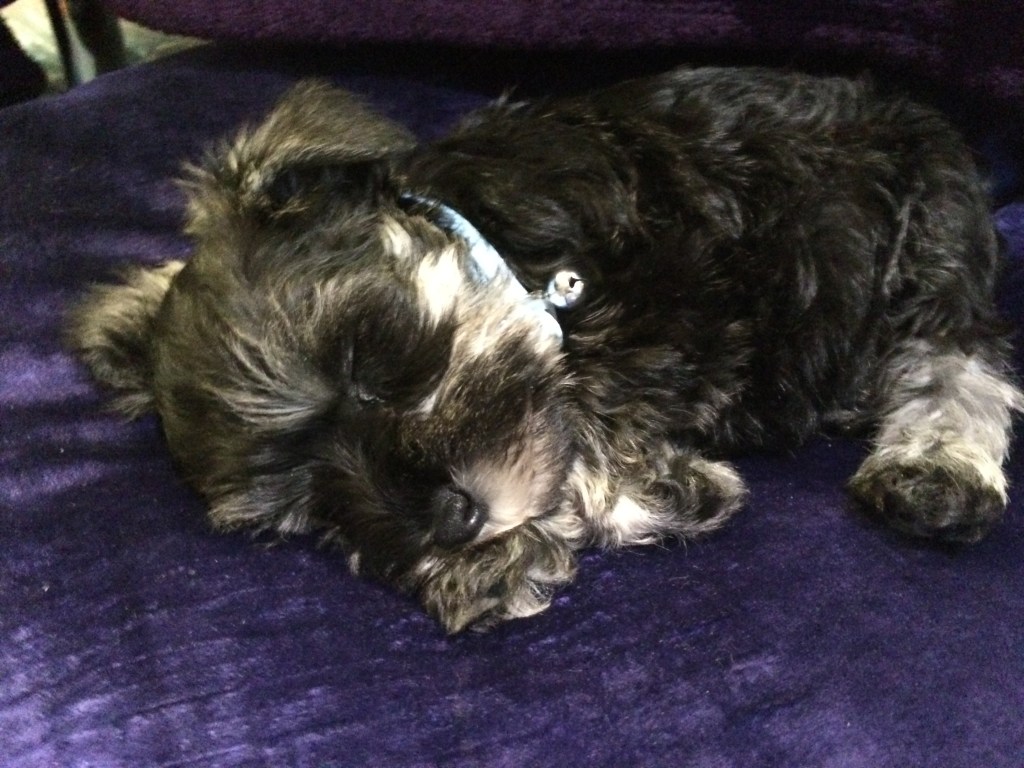
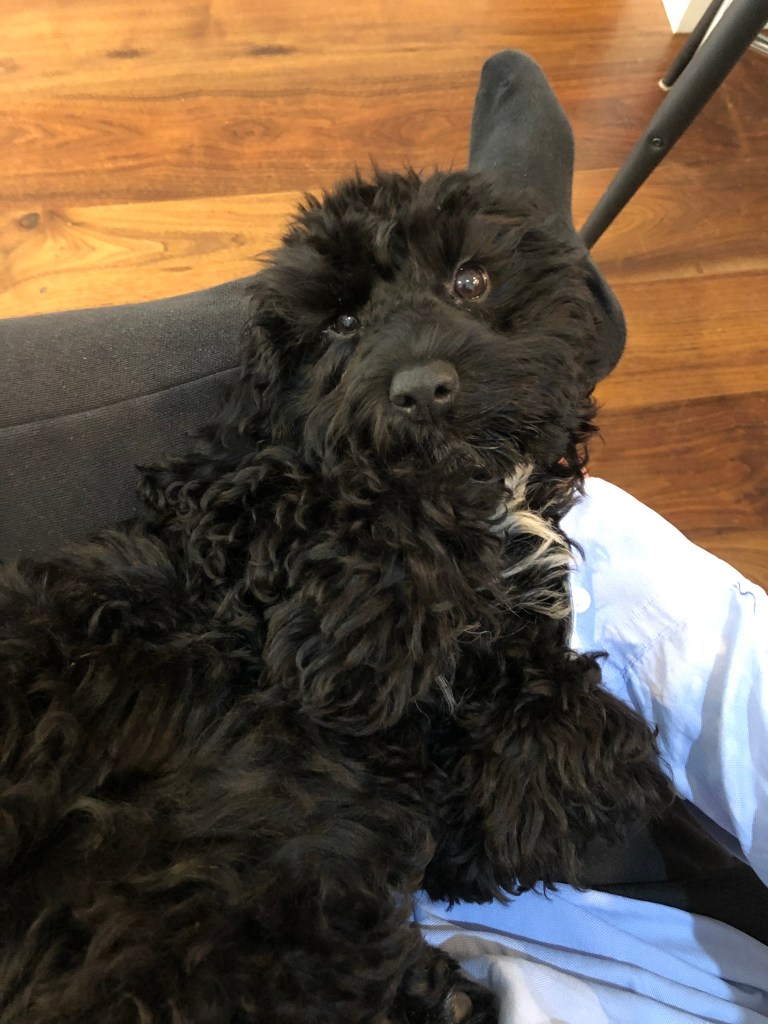
    But back to 1964 and coincidentally the big hit “I’m the One” by Gerry and the Pacemakers in February. To commemorate my birth, I added these two photos, as I can’t believe my brother Adrian wouldn’t have actually preferred a four-legged friend if he had come to know Angie or Bella: their stories will come later in the tale.

    And then there was Bella

    Unfortunately, I have only a very limited recall of my younger years – apart from a fight in the playground with a Romanian kid Nicolae N., nicknamed “nasty” at school, who had used a denigrating term about my mother. I must have been ten at the time. I told him to apologise or fight in the playground. Nicolae chose the latter. He tried to kick and scratch me. In response I just pushed him slightly into the railings. No real force and no actual damage. He still ran off to the teachers in tears. Naturally I denied all responsibility. Not surprisingly, he didn’t bother me subsequently. 

    When I look back now, I must admit to feeling some guilt. It must have been hard to be Romanian in the UK in the early 1970s when the Socialist Republic of Romania was an impoverished totalitarian country under the leader of the Romanian Communist Party and Head of State Nicolae Ceaușescu. Admittedly that psycho got his just desserts, albeit after oppressing his country and people for almost a quarter of a century.

    Around this time I was also chosen by a teacher at The Hall to play the giant in Jack and the Beanstalk – I have to assume that nobody else wanted the role. I stood high up on a ladder behind a screen – probably unimaginable in today’s climate given the evident risks. It felt surreal – and I doubt my roars and shouts scared anyone! This led me at one stage to nurture hopes of an acting career, but that didn’t play out. 

    I did, however, have success in chess at school and at a local club, entering tournaments and winning prizes. At the UK national championship I ranked 66th for the under 13 age group when 11 and felt good. However, I subsequently got the chance to play future grandmaster Nigel Short who was a year younger where I was outclassed – or to be honest, humiliated. I realised that this was another avenue where I was unlikely to make it to the top.

    The scariest event, however, was when I was chased home by a rabid Alsatian – at least that was the impression I had at the time from the excessive aggression and drooling. Luckily I was fast back then!

    We did have pets at home – hamsters, although there were one major drawback – they didn’t live long.  We did have another resident, albeit unknown for a while until mum opened the cracker box to see another four-legged creature – a little dormouse or possibly rat clearly terrified of the fate awaiting him. We carried him to Hampstead Heath which was just down the road and let him roam free there. I hope he lived to a ripe old age, but doubt it!

    Leave a Reply

  • I have to apologise again as my story will have to wait a little longer. I realised recently after chats with friends (the outstanding confidence coach and special needs teacher Russell Edwards, for one – https://www.russellrkedwards.com) that I should say more about my mum, and in passing my dad. Notwithstanding the health issues that mum had to tackle herself first and foremost, she remained resilient and loving, thoughtful and caring throughout.

    She sacrificed a potential career to enable her husband to flourish and assisted him intellectually, as well as emotionally. She also provided a grounding for the children. She was always available for us.

    In addition, whenever we had friends stay over, she would not let them leave the following morning without a proper breakfast, which was more like a meal that would keep them going for the whole day. 

    I am grateful to my mum for the calm and loving atmosphere that she created. I wouldn’t be half the man I am today without that input. And I know my dad was enamoured of her until the end. After his two strokes, she cared for him in a way evocative of both her devotion and character. 

    This was no doubt the hardest time for her. Although it must have been unbearable to continue after he died. For she had dedicated her life to him and the family. And then he was gone, while the children lived abroad or had other issues to handle in the UK.

    The key problem was that my parents had been so close and focused on us and themselves that they had not kept close friends outside the family. In my dad’s case, he had also spent a considerable amount of time going out of his way to help his students, which has been reflected in their lovely comments about Ken ever since.

    And this is where I call on any readers to do their utmost to ensure that both their parents (if they are still around) and they themselves maintain a small network of friends, the people  who are dear to you. 

    However, my mum didn’t give up. She finished my dad’s last opus and then gave herself fully to charity work, taking the train regularly into town to feed the homeless. In fact she had throughout her life stopped when seeing young and older people of the streets, taking the time to talk to them and take them to a café. 

    She also built a new group of friends whom she would see regularly, including from my own friends, including a lovely Scottish lass Moira whom I had got to know through her husband Tim. She contacted me last week to ask about my news, but also to talk about the wonderful time she had spent with my mum after my dad had passed and when I wasn’t in the country (although I would come home regularly to see her). 

    I always remember fondly how we would go camping in Europe every year for a month in late July-August as my dad took time off work and my mum provided invaluable assistance to him on the journey when people still had to use maps. That would be a special month, with the joy of departure replaced by sadness when we crossed the channel back to the UK. I am grateful to them for these annual trips and for all the love and care they showed every day. I owe my mum and dad everything. 

    Leave a Reply

  • I was going to start on my story, but then realised that there is still a way to go with my dad. On honeymoon my dad discovered that my mum had some health issues that her parents had opted not to disclose. However, this did not make him love her any less or seek a way out of his commitment to her. He wasn’t that kind of person. He cared for her throughout his life. 

    Don’t get me wrong here. My mum also played a vital, positive role in his life. She was similarly committed to him and was a remarkable support to him when he was paralysed after two strokes in rapid succession. I believe that they were truly very happy together. To be honest, I think my mum sacrificed a budding career by opting to dedicate herself to look after the kids. She worked for a long time as secretary on an archaeological journal and then for a long time as an editor dealing with complaints for the John Lewis magazine (John Lewis & Partners).

    Shortly after their return from Sri Lanka, my dad was appointed in 1948 as a lecturer in the history of modern India in London at the School of Oriental and African Studies (SOAS), a research university in the capital. It is in London that my parents had their first three children and after a subsequent miscarriage, that appeared to be it. The family moved to Oxford in 1963-65 where he was a reader in Indian History at St Antony’s College. 

    He loved the atmosphere there, but became embroiled in a dispute over management plans to allocate the space used by the oriental institute for a computer centre. My dad campaigned vociferously with others in the vote on this move. However, the university’s management bused in loads of people to vote on their side. Shortly afterwards SOAS advertised the post of Chair of the History of South Asia. My dad applied and was accepted. He remained in that post from October 1965 until his retirement in 1988. I personally believe that was a mistake, as he could have carried on and might thereby have lived a longer life, but he wanted to make way for the next generation.

    My dad gained some renown on two occasions. One case concerned a favourable review in The Times of his book Race, Sex and Class under the Raj, with the unforgettable headline of “Queen Victoria in the Brothel.” You will have to read the work in question to know why!

    On another instance, a hagiographic portrayal in a BBC documentary of Mahatma Gandhi as a saint was called into question by one of the few comments by my dad to be kept in the programme. My dad noted that Gandhi’s habit of proving his purity by sleeping with 13-year old virgins (and allegedly not deflowering them) didn’t prove anything at all, given that the girls were highly unlikely to speak out. 

    However, back to Oxford. My mum asked my brother Adrian if he would prefer a younger brother or a dog. Naturally he opted for the latter. Luckily for me, it was too late to change the circumstances and I saw the light of day in 1964. Adrian said he preferred me to a dog. I find it hard, but have to believe him.

    Leave a Reply

  • So World War II ends in 1945, with the United Kingdom allegedly one of the victors. However, it didn’t feel like that to the returning soldiers or the population back home. Wars are expensive. The country was effectively bankrupt at the time. They also tend to have a detrimental impact on society, especially in case of bombings and the significant loss of young people. The euphoria of victory is rapidly replaced by concerns about the future.

    Winston Churchill, considered one of the major drivers of the victory, as depicted in a number of superb films, including Darkest Hour (2017) starring Gary Oldman, was unceremoniously kicked out at the elections in 1945. The country no longer needed to be on a war footing and the public in general believed that only a change of leadership and a different vision of the future could usher in the stability that the country needed. 

    The incoming government of the Labour Party, led by former Deputy Prime Minister of the coalition government Clement Atlee, won a landslide, securing a majority of 146 seats. As well as granting independence to India in 1947, it instituted a number of social reforms, creating the welfare state, with the foundation of the National Health Service and the nationalisation of the power and railway industries. Rationing introduced during the war continued until 1954. There was also a serious shortage of housing.

    Meanwhile my dad had to stay in India for another year after the end of the war for some reason.  It might have been connected to the alleged court martial. Otherwise, I can only assume that he had been kept there to assist with debriefings, facilitate the return of prisoners-of-war to Japan, and possibly other countries, and sign non-disclosure agreements. Unfortunately, to date I have been unable to obtain more details due to state secrecy. If anyone out there knows more, please write!

    Ken returned to the UK in 1946. Given the state of the country, the aforementioned rationing and housing issues, it must have been a considerable relief to return to Peterhouse, Cambridge and university life on a scholarship, with a room to stay and food of some sort, as well as a chance to recuperate and focus on studies. As I mentioned previously, my dad ended up graduating with a first in history from Cambridge. 

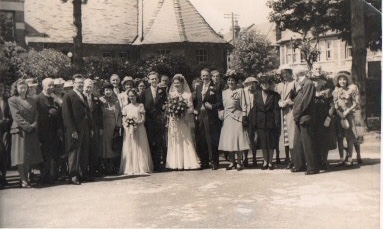
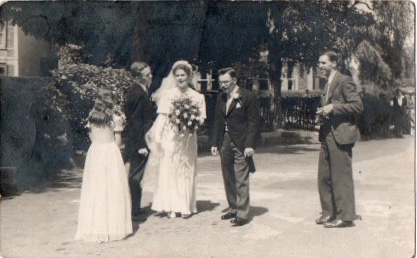
    More importantly, he no longer had to go it alone. One day, while studying in the library, he was drawn to a dark-haired beauty there. He asked her out for a coffee. However, the story of the actual meeting varies, depending on the narrator – my dad would always tell me that he had approached his future wife Joan, while my mum would claim to my sister Helen that she had been the instigator. Luckily for us one of them made the move! 

    My mum was also the first in her family to get to university and similarly had won a scholarship to study at Cambridge. While my dad was at the all-male college Peterhouse, my mum was at the all-female college, Girton. Well, all the colleges at Cambridge were single sex in those days. She also studied history. They had also both been born and grown up in Bristol, with my mum studying at the girl’s school Redmaids. My mum’s dad worked at a local bank all his life, while her mother was a housewife, bringing up Joan and her younger brother Michael.

    On graduation, as he embarked on a doctorate, my dad spent a year as a lecturer in Ceylon, now known as Sri Lanka, taking his wife Joan with him on a long honeymoon before they embarked on bringing four children into the world. It might have been only three and I would have remained a ghost in the machine. 

    But that, as they say, is another story.

    Leave a Reply