The USSR had been on the verge of collapse for a couple of years as other republics sought to secede, with the Baltic States (Estonia, Latvia and Lithuania) leading the way, declaring independence in 1990. The presidential elections of Boris Yeltsin in Russia in 1990, Nursultan Nazarbayev in Kazakhstan and Leonid Kravchuk in Ukraine in 1991 all presaged the further break-up of the Soviet Union, although admittedly I had no idea at the time that everything would unravel so quickly.
Against the backdrop of the negative economic outlook, Gorbachev was being squeezed on the left by hardliners advocating stringent controls and a reversal of the changes that he had implemented and on the right by reformers pushing for more radical steps to free up the economy and life in general. Something had to give. And in August it did.
I remember to this day coming to work usual on 19 August 1991, only to see tanks stationed in front of the APN Novosti news agency, countless soldiers with Kalashnikovs and hostile stares as I entered the building, with my pass checked more slowly and diligently than was the norm. This building was playing a part as a propaganda unit as a coup d’etat enacted by a group of senile security, military, law enforcement and some civilian figures, who were apoplectic over Gorbachev’s political reforms, the loss of control over Eastern Europe, the increasing independence of Estonia, Latvia and Lithuania, Ukraine, Kazakhstan and lastly Russia, and a new Union Treaty scheduled for signing on 20 August that would decentralise power from the centre in Russia. with the public support of the Soviet politburo, to the other 14 republics and the loss of control over Eastern Europe.
And now some renegade and prematurely aging communists sought to turn the country backwards in line with their nostalgic views of a radiant past that had never existed – or at least not for the public at large. In actual fact, the KGB under the leadership of Chairman Vladimir Kryuchkov had been planning the coup since June 1990. Another member of the coup’s orchestrators was Gorbachev’s Vice-President Gennady Yanayev, one of three young members of the group at the tender age of 54 (together with Prime Minister Valentin Pavlov and Interior Minister Boris Pugo), who claimed that Gorbachev was on vacation at his dacha at Crimea where he was undergoing treatment and was seriously ill, and assumed the Presidency.
In actual fact, Gorbachev had been arrested there on the orders of Yanayev and other members of the so-called “Gang of Eight”, operating under the name “State Committee of the State of Emergency”. The group also included three older members in their late 60s-early 70s, but who looked over 80. In actual fact, they resembled geriatrics who had lost their marbles.
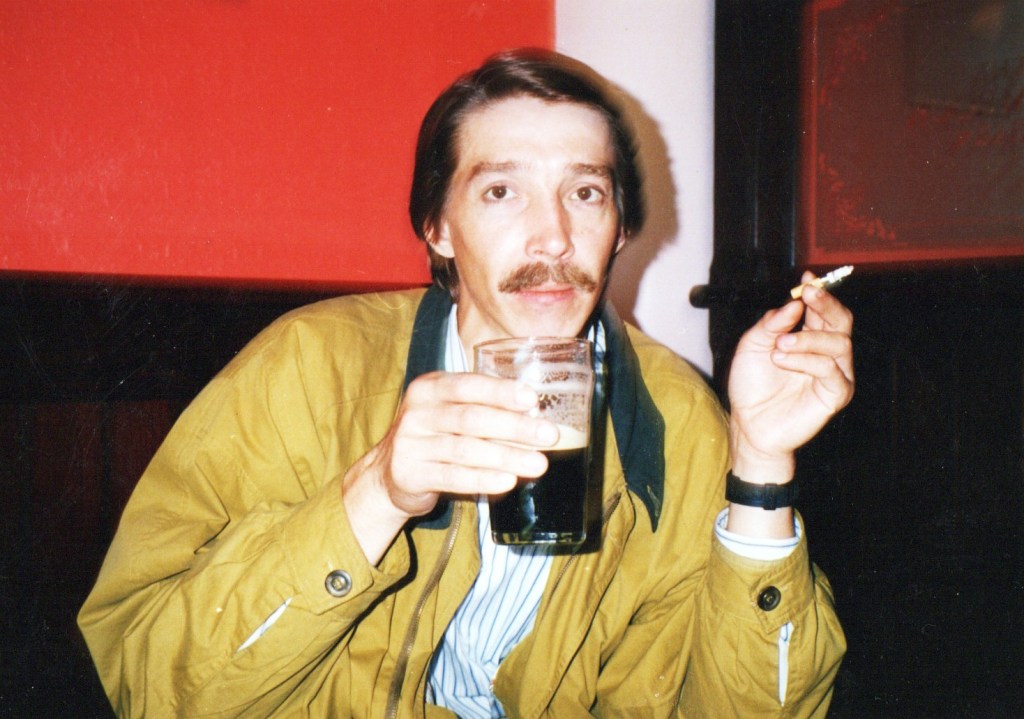
Meanwhile at RIA Novosti, which was also used for the hosting of conferences by the above group, the room where I sat with fellow Russian-English translators and other premises housing similar Russian-German, French, Spanish, Italian and Portuguese experts emptied as people left the building, smoked or stood in the corridor trying to gauge what was happening and why. There was a pervasive sense of despair, with everyone fearing the worst and a return to the 1960s. I joined others in walking around Moscow, discerning the mood and observing the tanks and other military vehicles and solders, and then drinking Guiness at the Shamrock Pub, the first Irish pub which had opened the previous month, with my cigarette smoking translator pal Sasha. The atmosphere was gloomy, that is, until we saw barriers being erected by the public late that afternoon, leading Yanayev to declare a state of emergency.
Clearly, the coup wasn’t going to plan. While the hardliners had successfully orchestrated the detention of Gorbachev by the KGB at his country residence in Crimea, Ukraine, they had failed to detain Russian President Boris Yeltsin on his return from a trip to Kazakhstan, as he had arranged for the diversion of the plane to a different airport. As time passed on that first day, troops gradually deserted from the Soviet forces to join Russian units that supported Yeltsin.
Subsequently, Yeltsin set up a base in central Moscow at the parliament building, known as Russia’s White House on Krasnopresnenskaya Embankment. Yeltsin managed to secure the support of the Soviet armed forces stationed in Russia and called for popular support. A considerable number of people gathered outside the White House and vowed to defend Yeltsin. I joined them on 20 June with a number of Russian translators, with most of us staying there until late in the night or even morning, with the metro running all night.
There was only one confrontation, which led to the loss of three lives. The culprit, a young captain Sergey Surovikin, would subsequently play a role in the Russian-Ukrainian war, nicknamed General Armageddon for his role in indiscriminate bombing of Ukraine. The death of the three young protesters effectively transformed the conflict as elite special forces units refused to implement orders issued by the Gang of Eight. The coup had lasted all of three days.
While the outcome was an undoubted victory for Yeltsin, it spelled the end for Gorbachev. By the end of that week the initial despair amongst translators and other employees at the agency and elsewhere had been replaced by jubilation and hopes of a more liberal country, as people took to the streets and tore down the imposing statue of hated chief of the Soviet secret police Felix Dzerzhinsky located outside the central office of the KGB. There was another positive aspect: more film crews were coming over to cover the aftermath.
I still recall watching the press conferences of the aged Gang of Eight. While horrific, it also seemed comical and absurd that such a bunch of senile men would succeed in turning the clock back. At least that is what I thought back then. However, now everyone can see in 2026 a similar group of senile men running Russia into the ground and attempting to resurrect the Soviet Union.
Sasha in the Shamrock Pub, 19 August 1991
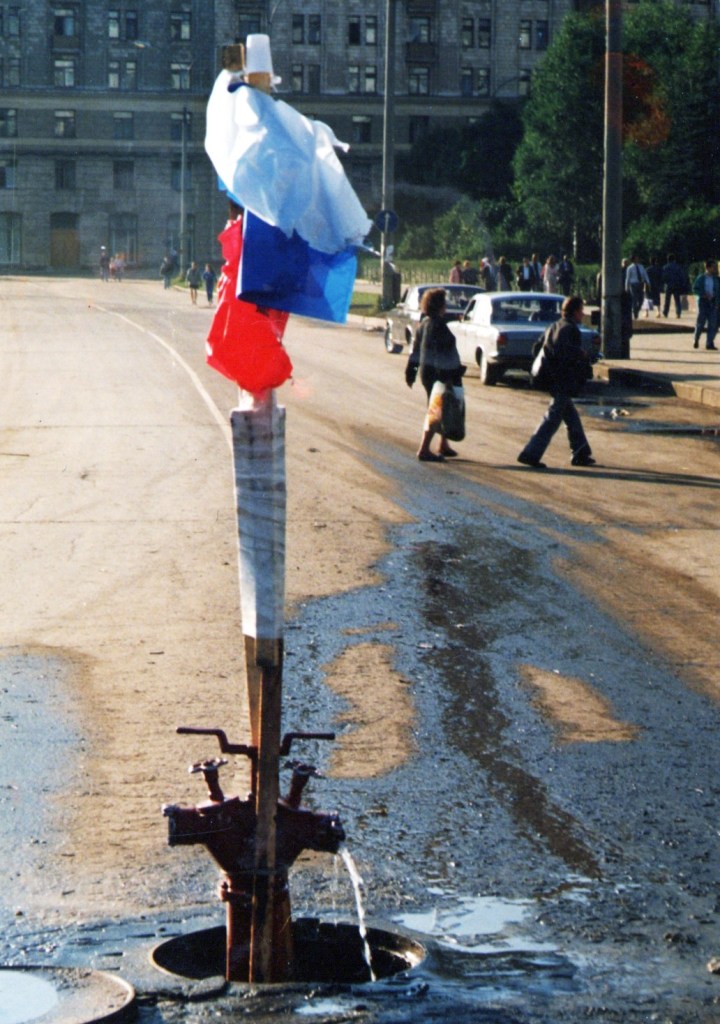
Russian flag after the coup
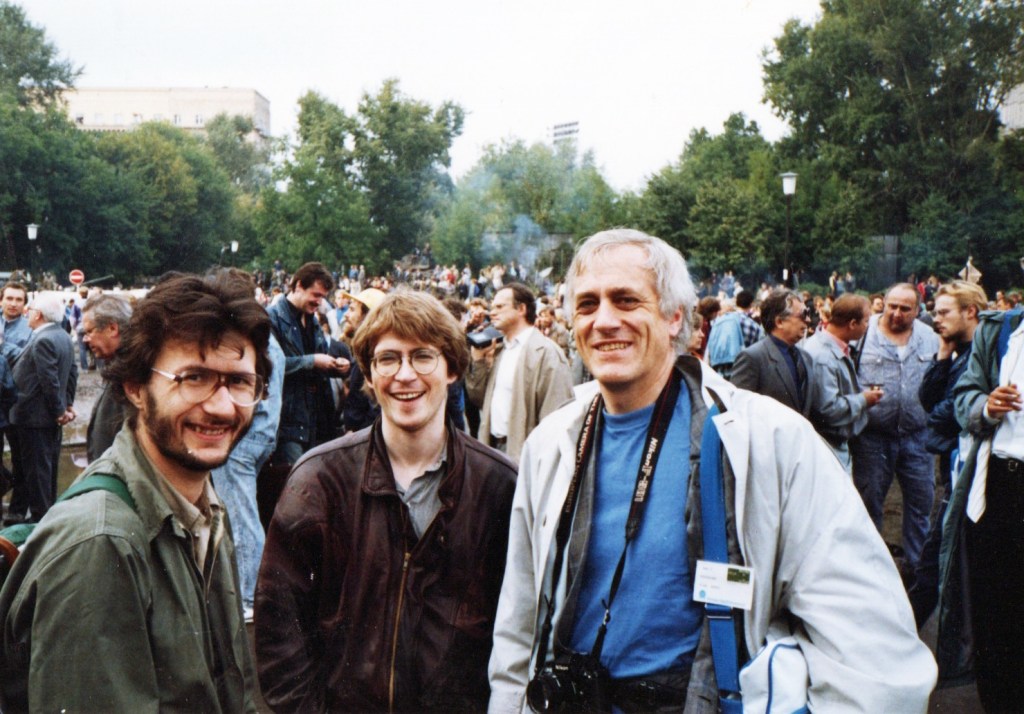
Yours truly, Ilya (Spanish translator) and a friend of his
Barricades in front of Russia’s White House
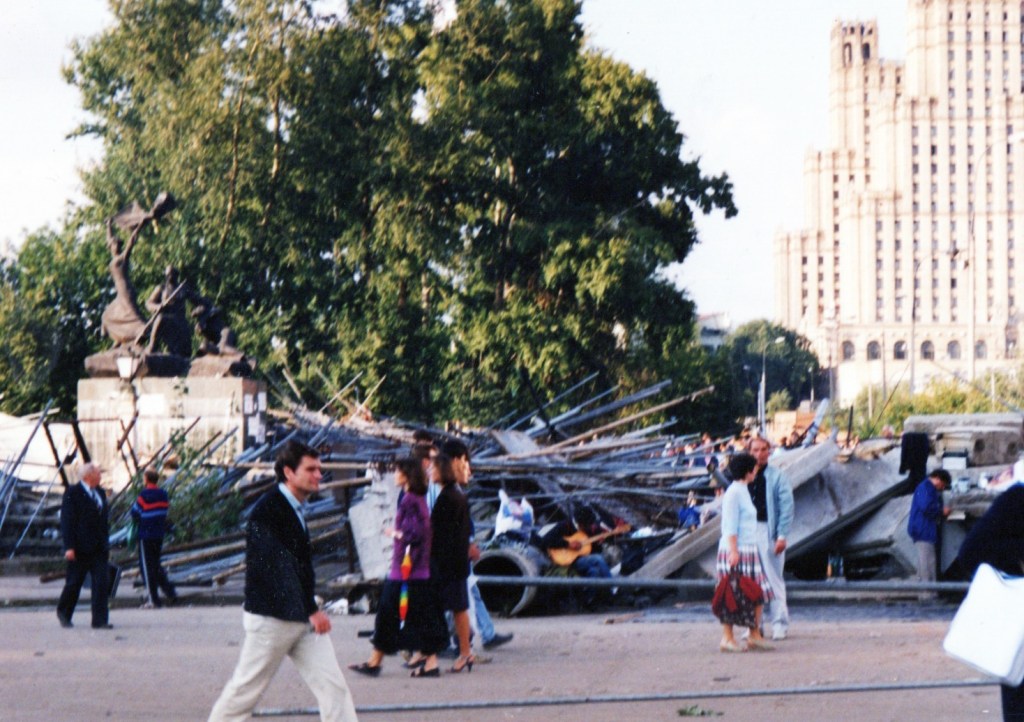
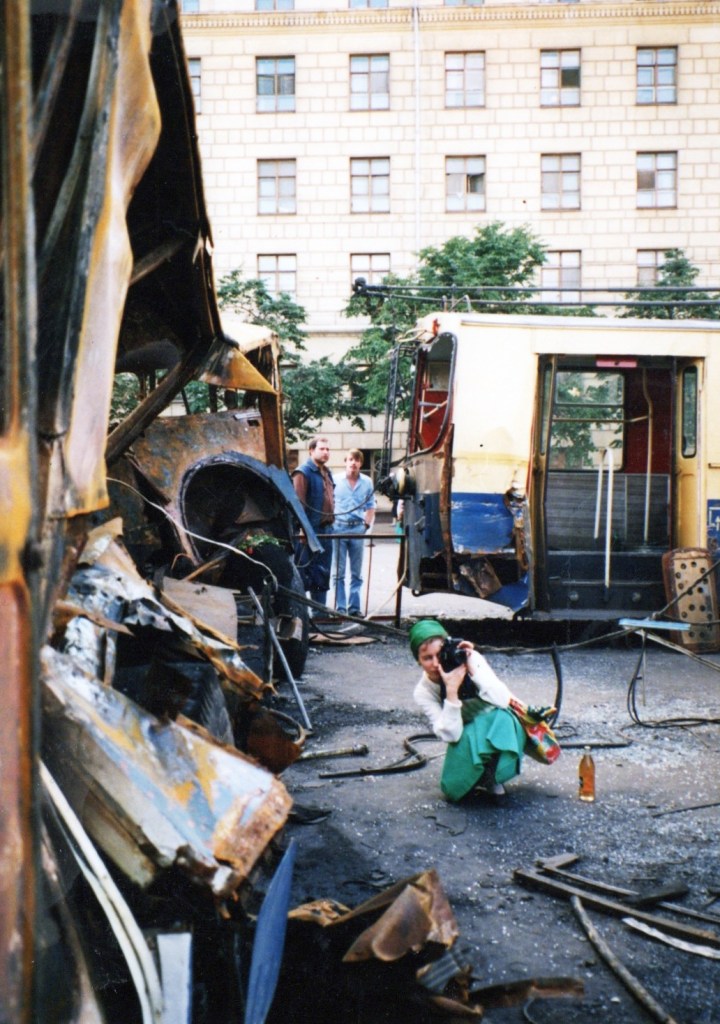
Carnage the day after
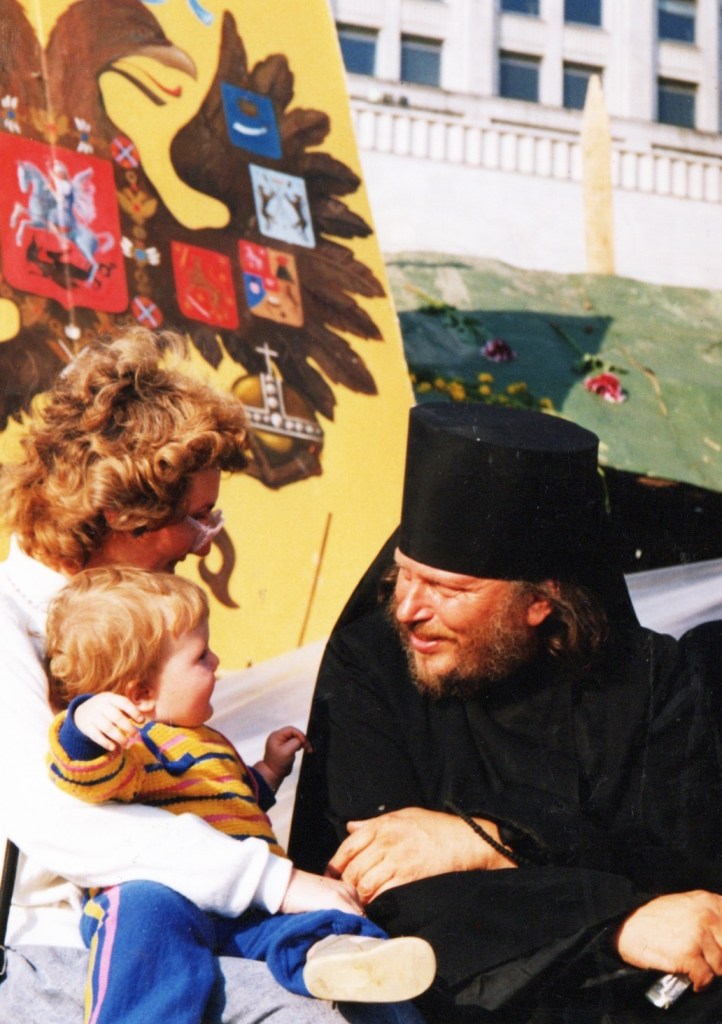
Russian Orthodox priest on the day after the failure of the putsch


Leave a Reply