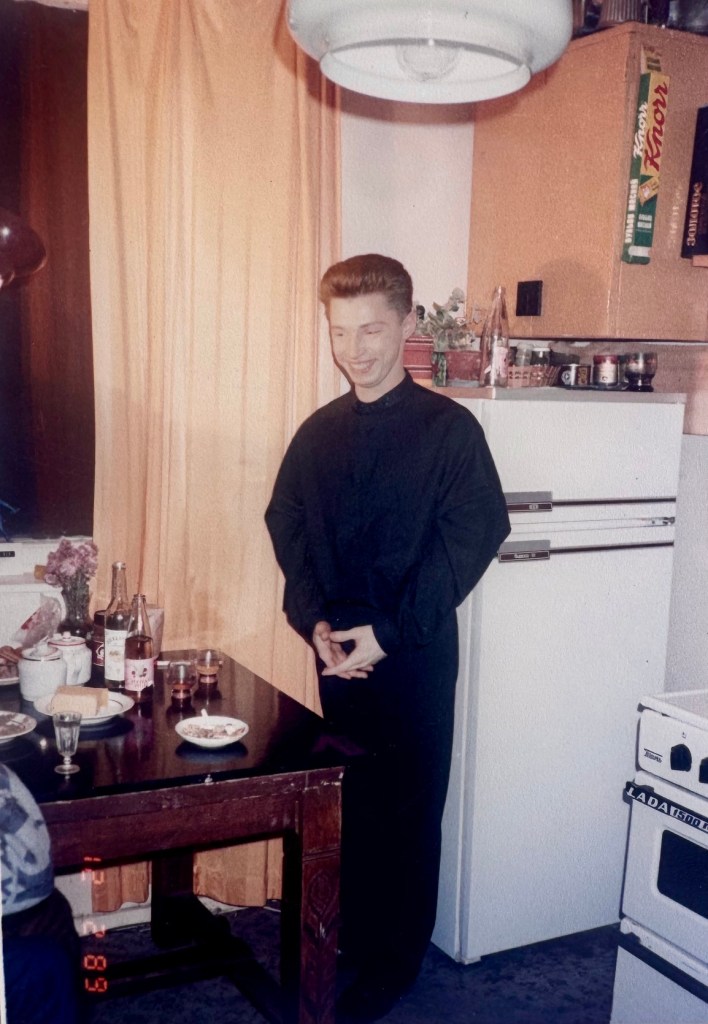
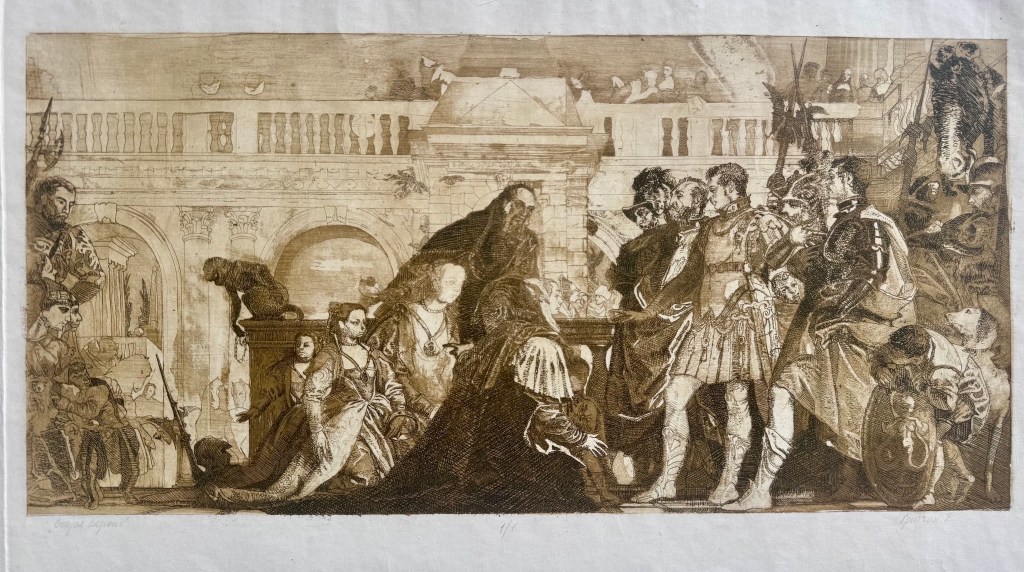
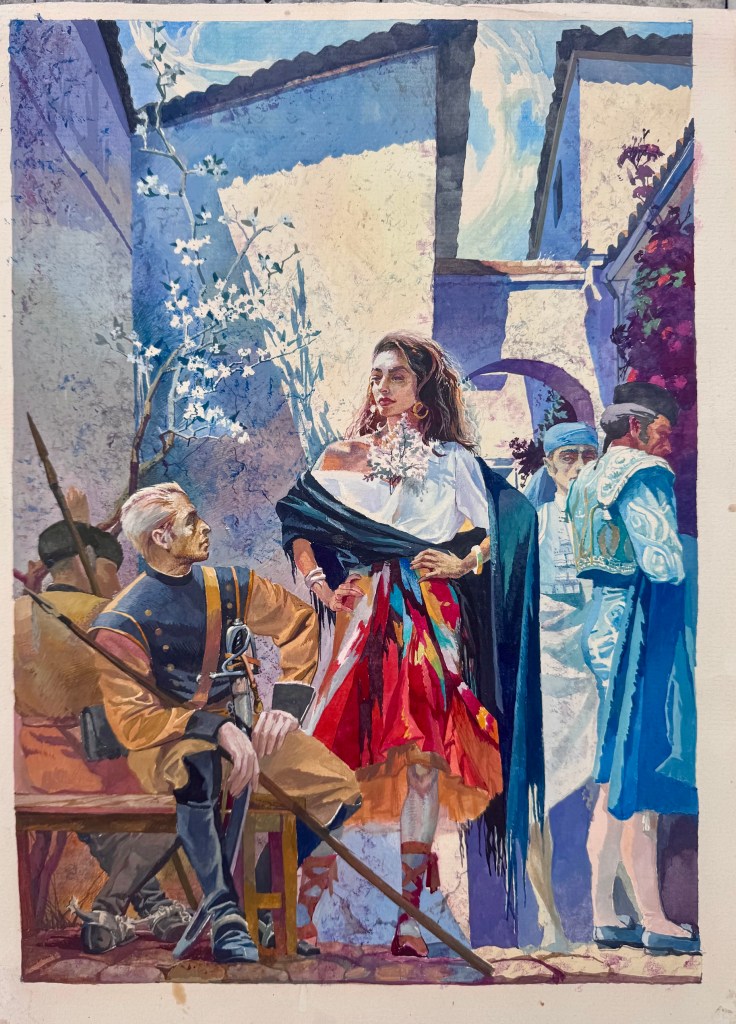
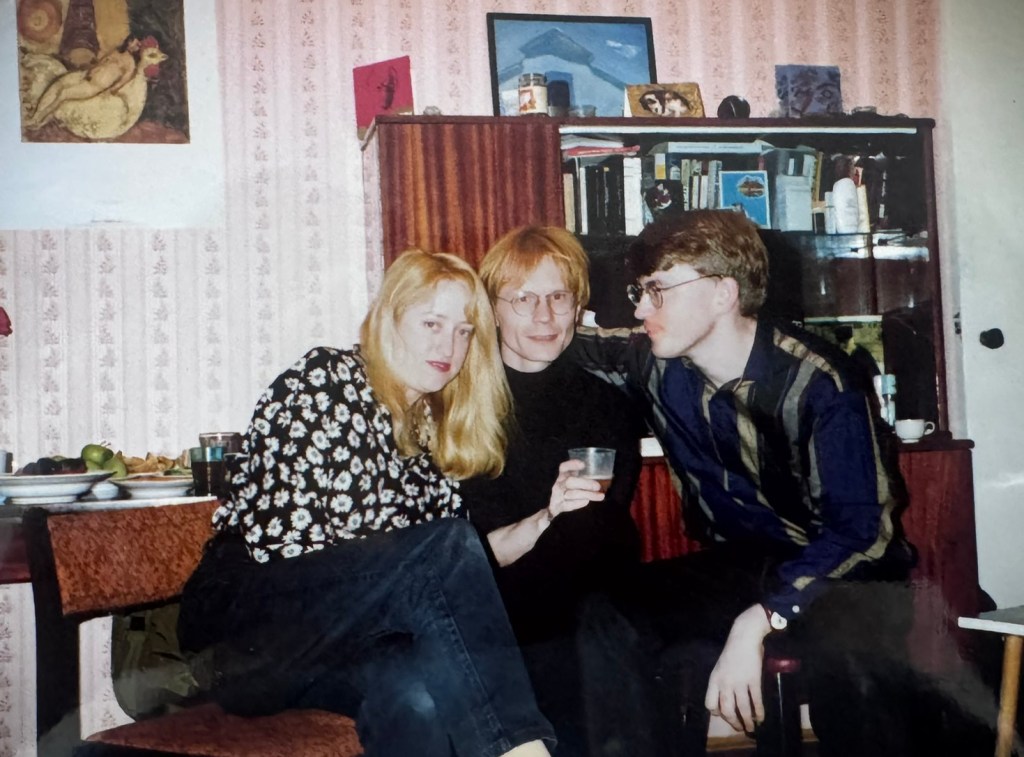
• By the end of January 1991 I was getting accustomed to the cold, the odd fall in the ice, the daily change at work from boots to the normal shoes kept under my desk, washing clothes in the bath with soap, dealing with the beady eyes and endless scuttling in the flat and embarking on trips to the local Rizhsky market located near Rizhsky railway station, one stop from my local Alexeyevskaya. The markets had emerged after the adoption of the Soviet Law on Cooperatives promoted by Mikhail Gorbachev in 1987.

    Their appearance had been a godsend for the general public, offering access to fresh meat, vegetables and fruit and other products, whilst enabling the authorities to test out reforms on a limited scale. The food markets would inevitably trigger the appearance of retail analogues nearby where the products on display varied from Western clothes and shoes to electronics (radios, cassette players, computers)  and western rock and pop bands on cassette tapes.  All these products would be imported by so-called chelnoki, the word literally meaning shuttles and in this case shuttle traders. This was the nickname assigned to those individuals who would manage somehow, clearly through bribes of some sort, to exit the Soviet Union to buy goods and then re-enter a few days later with the various products that would be sold at a significant profit. 

    I must say I wondered at the time about the ease with which they were able to leave, especially when I was prohibited from doing so, with my one-entry visa. That became a concern on 30 January when I received an unexpected phone call from my mum. She told me that my eldest brother John had died at the tender age of 40. 

    I always remember John as a gentle soul who was unlucky in both love and the choice of career and who only reconciled with my dad on his death bed. John had in later years blamed my dad for the school in Portsmouth, forgetting that he had instigated the move.  I had become close to him ever since the age of 15 when I had taken several buses to get to his house in Surrey and prevent him from committing suicide, bringing him back to my parent’s place in Ealing. I was to go there on a similar mission when 20. Owing to the age difference, my earliest memories date back to his ill-fated first wedding. However, I have learned more about him since then from my beloved sister Helen as they were much closer age-wise. She remembers him fondly as a great elder brother. And he was lucky to have her around.

    When he was twelve, John told my dad that he was interested in becoming a priest. My dad took him at face value and paid for his education at a boarding school in Southsea, Portsmouth, St John’s College, which closed in 2022 owing to a sharp fall in enrolments. The all-boys school had been founded by the De La Salle Brothers and promoted the Catholic faith. However, in the end John decided against following that path. Academically, he was good in English and excellent at mathematics. He was also acknowledged there as a great actor. My dad went to see a performance and couldn’t believe how good he was on stage. As soon as he turned 18, John returned to London, started working as a stockbroker and was successful. However, the atmosphere in the capital those days was tainted by what appeared to be mandatory alcoholic lunches where ideas were shared. John continued for a time to appear in a number of plays at a local amateur dramatics club, lived then in Hampstead with the flat Dad created for him at the house and had a lovely schoolteacher girlfriend. 

    However, one day he was coming home and on the middle of the zebra crossing when he was knocked down by a car which sped off without stopping. Luckily a kind passer-by contacted the ambulance services, and he recuperated almost fully. While in hospital, he met a nurse and ended up marrying her. They had two children whom my parents rarely saw, which meant that we lost sight of John as well. I recall seeing them once when I was 14. As I say, I was to see more of him luckily in the time to come. 

    Suffice to say that later in the marriage his wife asked for a divorce and then moved in with a neighbour. John was heartbroken, but soldiered on. Eventually he met another lady and had two children with her. The children have issues, but are lovely. 

    However, in January 1991 John was fired by a Japanese stockbroker that he had recently joined due to staffing cutbacks based on the LIFO principle (Last In, First Out). He came home the worse for wear at his property located near my parent’s place in Richmond, only find a note from his second partner, demanding that he leave. 

    Unfortunately, she didn’t bother to tell our parents what she had done, something that was unforgiveable and something I said to her at a later date. John swallowed some pills, regretted it, but then collapsed. He ended up in hospital for a few days where he made up with dad. This event would inevitably have an indelible impact on the other children, but more so on my parents, and especially my father. John had life insurance, which covered the mortgages on both houses. But that was no compensation to us for the loss of someone so dear.

    And so I turned up at work on 31 January, shaken and desperate to head home and see the family. I told Sergey and he promised to do his utmost to resolve the problem. However, he got back to me with the grim news that Soviet management at the top of APN refused to give me an exit visa to attend the funeral and support the family back home. I had only just arrived, had cost the agency money and management determined that there was no certainty that I would come back. All my attempts to reverse the decision, indicate that I would cover any expenses and would definitely return were to no avail. And this is one thing that I will never forgive that quasi-communist regime for taking away from me: a total lack of compassion and indifference, and a real chance to say goodbye to my brother. Whenever left-wingers in the UK back then cited the USSR as socialism with a human face (and some even do so today), I just laughed at their ignorance. Unfortunately, this is when the drinking took over. However, not as badly as it could, owing to the lack of alcohol in the shops and limited access to the journalist bar at APN. I just felt numb. 

    I often think of John and remember the good times, going for a pint and playing pool, walking in parks, chatting, smiling, laughing and hugging. He would often wax lyrical about all his kids, all the more so the elder two whom he was prevented by his ex from seeing or contacting. John was really special. I just wish that he had lived longer and that I had had more time to spend with him. And that I had been with my other brother Adrian and sister Helen and beside my parents at a time where I might have been able to lend a helping hand. 

    However, it was not to be. I had now seen for myself the cold, unyielding and faceless facet of the USSR and realised yet again that it was doomed in no so small part for that reason. 

    Leave a comment

  • Admittedly, there was a third option. Instead of queuing for hours and hoping against hope that the butcher might look kindly on you, exchanging a high-demand ticket for a good cut of meat, or paying far more than state-regulated prices at open-air markets, some people were able to benefit from the so-called Zakaz system. The transliterated word Zakaz is the Russian for Order. Established in the 1980s to distribute higher-quality goods that were in short supply to a limited number of workplaces and offices, as well as to the privileged few in the USSR (known as the nomenklatura), this enabled specific groups to avoid any contact with the public as a whole and not have to queue in vain for hours at food shops that offered at most second-rate potatoes and carrots and meat that looked far from fresh. 

    Naturally the elite in the socialist system would enjoy access to the most varied selection of goods. As George Orwell put it in Animal Farm: all animals are equal, but some are more equal than others. This was so true that it is not surprising that Orwell’s superb novels 1984 and Animal Farm castigating the alleged communism and hypocrisy of the Soviet bloc were banned in the USSR. My dad had always claimed to be a Marxian and not a Marxist, as there was a fatal flaw in the entire concept: the people at the top did not adhere to the same rules and restrictions imposed on the rest of society, and corruption naturally became endemic. Admittedly, the ban on his books was lifted in the late 1980s by Mikhail Gorbachev, the last Secretary General of the Soviet Union.

    In a way, these elites could be compared to the aristocratic ruling class, tech bros and the majority of the rich we see today in capitalist societies who do their utmost to avoid paying any tax whatsoever, while enjoying every single benefit available to taxpayers.  The communist elite were no different: they ranged from politicians and high-ranking bureaucrats in every industry to academics, army officers and other individuals with special status, writers, actors, athletes, journalists, etc, who were primarily paid-up members of the Communist Party (and this approach had been practised in all the states in Eastern Europe in the Soviet bloc until late 1989). 

    And it should come as no surprise that a significant number of these people, who would trumpet for years the moral superiority of the USSR compared to the decadent west, had managed somehow to open bank accounts in Switzerland and other countries and squirrel off state funds either through secret channels or via a number of the so-called Soviet dissidents who had claimed asylum in the west, but were in fact stooges of the secret services, or via foreign agents operating in the free world. They were nowhere to be seen when the country was effectively bankrupt at the end of 1991. According to various estimates, when foreign investment poured into Russia and enterprises were privatised in dubious ways after 1992, the accounts of these individuals represented over 50% of these funds.

    So the ruling elite would naturally be granted initial access to food in short supply. I assume that they were other lists for luxury goods, cars, etc. Unfortunately, I never had the good fortune to flick through the pages of such documents.  However, as I was working for a leading propaganda vehicle, I was presented one day with a massive book, which listed all manner of products that I had not seen in the shops, from caviar, all manner of fishes and meats to Soviet champagne and various concoctions I had never seen.  It must have been at least 20 pages long. This was the order book for the press agency. My eyes literally glazed over and, as you can imagine, I ticked a significant number of items, excited at the prospect of obtaining all these sought-after products and at such low prices. I thought: finally, I would be rewarded for agreeing to work there on such a low salary. You had to go to a particular address at the weekend to pay and pick up the goods.

    When I arrived on Saturday and finally found the place hidden away as it ways from the prying public, I realised even more how privilege and status mattered. On arriving, I watched in excitement as a number of people came out laden to bursting with goods and got into chauffeur-driven cars. When it was my turn, I was initially angry, but then smiled wryly as Orwell’s take on communist hypocrisy came to mind: out of the list of goods I had ticked, I was given two cans of fish and some buckwheat. After trying out this option on two further occasions with similar results, I decided to stick to the open-air food markets.

    While I was walking down the street in that first snowy winter, I was struck at how everyone would carry every day either a plastic bag, all manner of briefcases, even suitcases and rucksacks that had clearly been acquired from the west. At first glance, they didn’t seem to be that heavy. I couldn’t fathom why there would be such a plethora of carryalls as you weren’t as a rule allowed to take anything out of your workplace.

    And then it clicked: one day I saw a massive queue forming outside a store that was selling Soviet champagne, cognac and vodka. I managed to the front. However, I was denied the opportunity to buy anything when I reached the counter – because I didn’t have an empty bottle to exchange for the vodka or champagne on top of the price. I promptly bought a couple on the underground package towards work from a red-faced tramp whose bloodshot eyes lit up at the sight of five roubles.

    Fortunately, Vadim knew his way around the APN building and could somehow get into the bar reserved for the agency’s journalists which was stocked with all manner of Russian and Western alcohol at discounted prices. However, I have to admit that those trips, which were frequent in February that year, were brutal on the liver. Vadim introduced me to an alcoholic combination that I have sought to avoid ever since, known as the hedgehog (transliterated Russian word ezh). You would down a shot of vodka and then follow that by drinking a pint of beer almost at the same speed. The first time I was almost legless after a few of them. I got used to it though, but had stopped imbibing it by that summer.

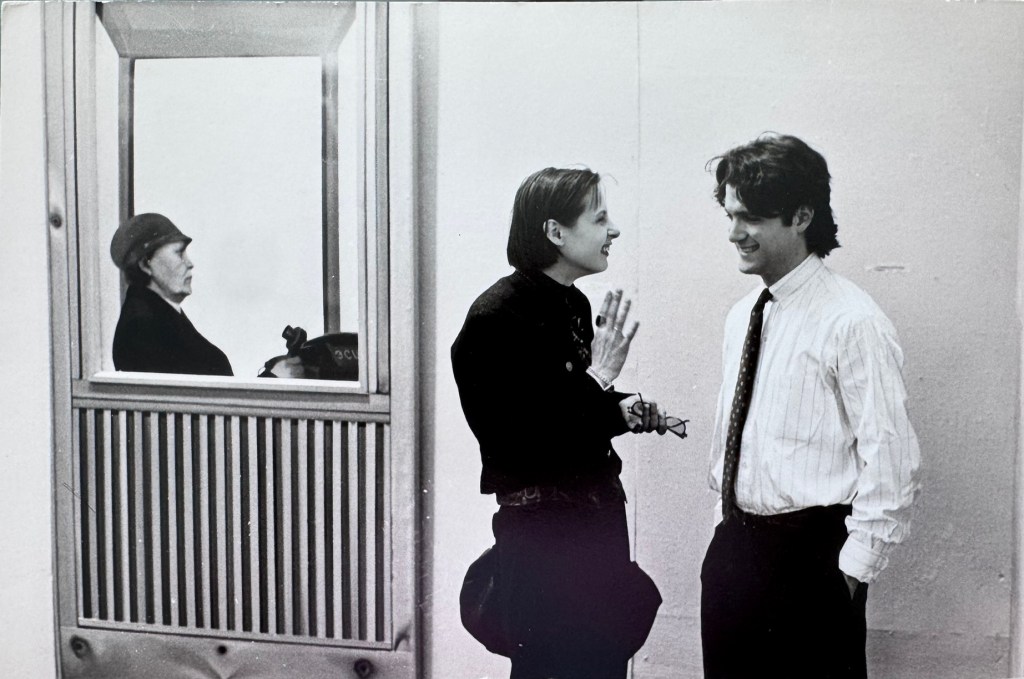
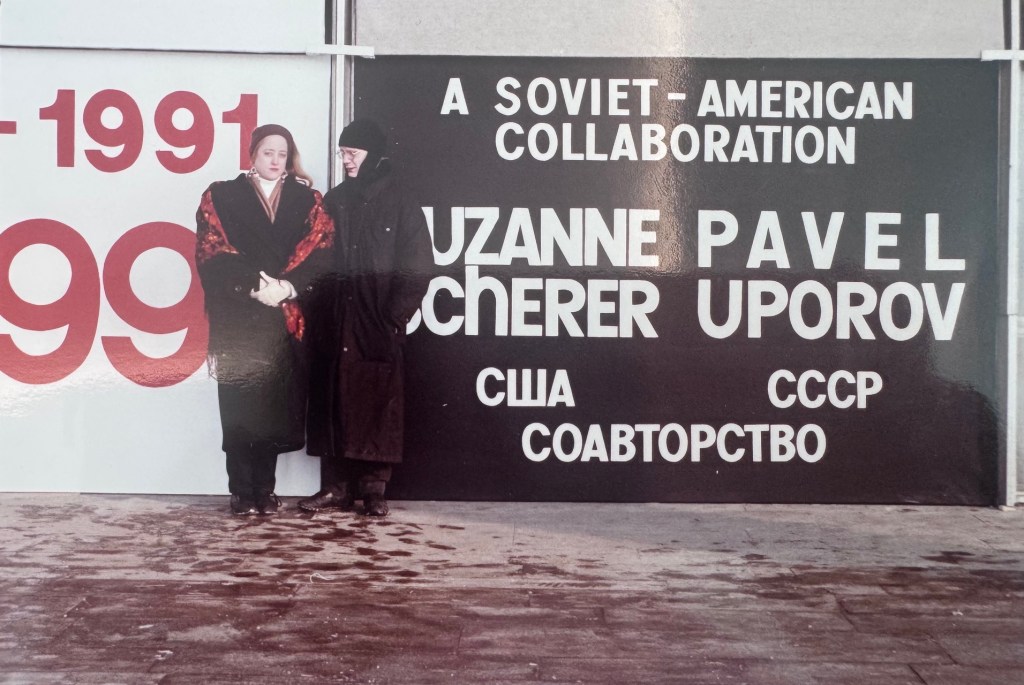
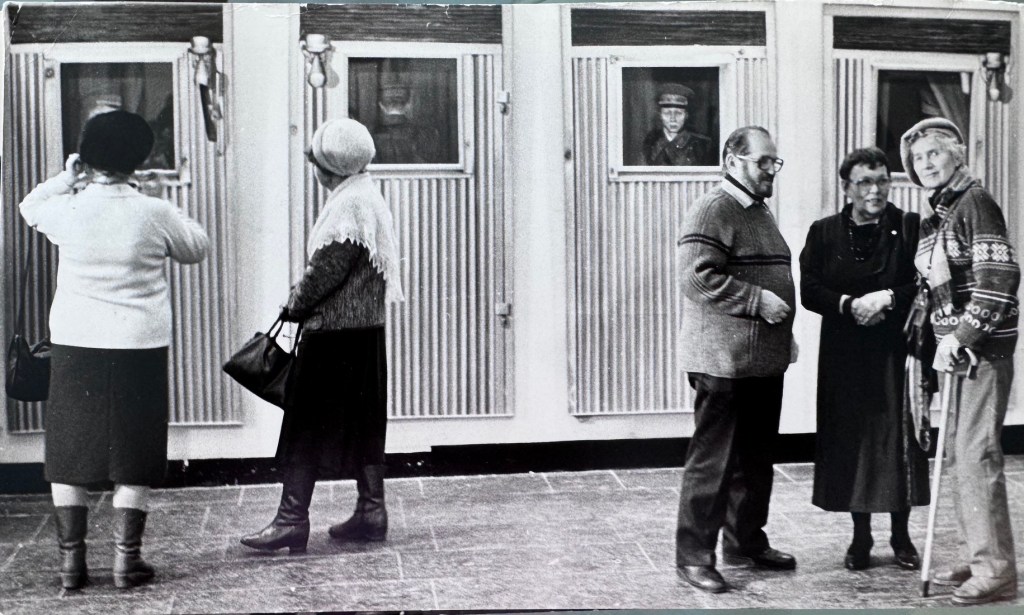
    I did indeed drink a lot of vodka in the first half of 1991, as there was not much else on offer: the local beer Zhigulevskoye would give me the runs, while the Soviet champagne was far too sweet, and the Armenian cognac didn’t meet my taste buds. I would indeed get wasted a fair bit in the evenings back then for reasons that will become clear soon. I also took up smoking again, mainly buying imported Marlboros from kiosks on the street. I attribute this to the people I was spending more and more time with as the months passed: as well as Tim and Moira and some great translators, I would hang out with a lot of artists and actors whom I met in early February at Pavel and Suzanne’s exhibition, where smoking cigarettes and weed, when available, was par for the course. 

    And then something happened that I will never forgive or forget.

    Leave a comment

  • It was already 8:50 AM and I had to get there by 9. No zebra crossing and no traffic lights. To cross the road to APN, I had to walk down a number of steps, along a corridor of underground kiosks and then up the other side. As well as the kiosks, you would pass by individuals hawking various goods, from chewing gum to cigarettes, single batteries and even empty bottles. I will turn to their practical value in another entry. They serve as the basis for a short story I hope to publish one day.

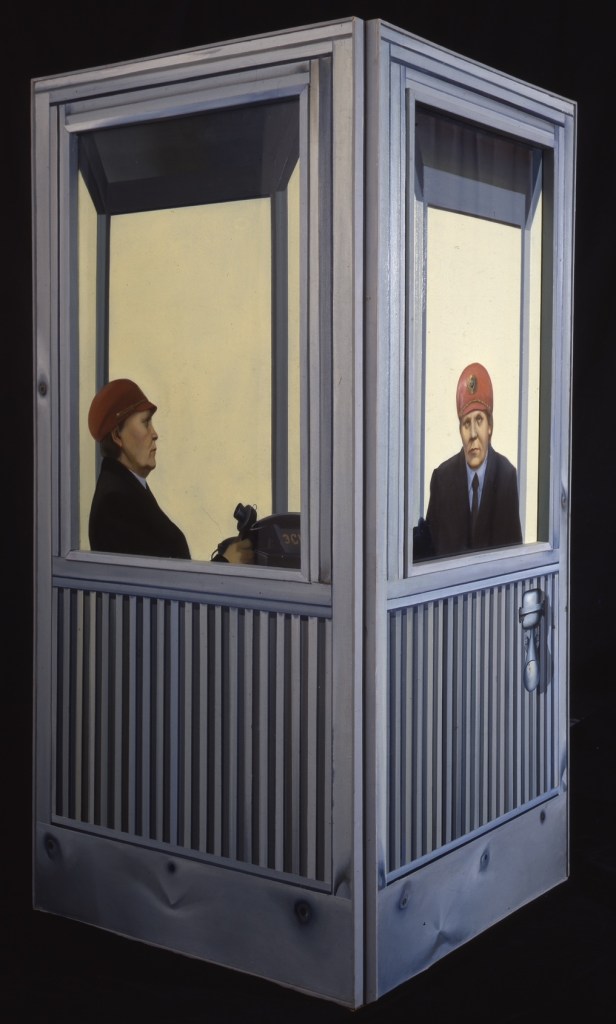
    Then I rushed through the corridor leading to the building and headed towards the entrance when an armed security guard stepped out of his booth, stopped me and demanded identification. I had my passport and a visa on me that I was duty-bound to present at any time to the police. It is worth noting here that Soviet citizens always needed to keep their internal passports on them in case they were stopped randomly, which contained as a rule a stamp inserted on the page on their housing situation, indicating that they had the necessary propiska (akin to a residency permit) to live in a specific place in the country. As I recall, there were two types: a permanent one indicative of the individual’s habitual place of accommodation and a temporary version in cases where the individual was only staying in the specific city for a defined period of time, for example, as a student.

    After showing the documents and explaining who I was, I duly waited for ten minutes at the building entrance while the guard used a red telephone to contact the translation department and prepared a temporary access permit for that day. Then I was met by the head of the translation department Sergey Muzolevsky, who appeared friendly. Well at least he smiled as he shook my hand. 

    And then I was introduced to the translators on the floor who were all amicable, including another English guy Ian who had been working there for a while as an editor and translator. His Russian was awesome. I don’t remember for sure, but believe that he had previously served in the military. He would soon move back to the UK with his Russian wife and family and work at BBC Monitoring Service in Caversham, which incidentally closed down in 2018 owing to cuts instituted by the conservative government. Similarly, Jennifer, another foreigner in her mid-20s and hailing from the US, also spoke outstanding Russian. She would duly become a writer in America.

    As well as Vadim, who was typing furiously with the window wide open, much to the frustration of the Lithuanian translator Vytautas sitting opposite who seemed to wear the same shirt every day. Hence the need for the open window even when it was minus 20. I remember very well Dima Zaitsev, in his mid-30s with thinning black hair and resembling the 19th century writer Lermontov, who was a well-known womaniser, the red-haired Alexander Samonin (Sasha) specialising in banking translations who was sartorial even in future years when the dress code was no longer so strict, and Irina Konstantinova who was a lovely lady with a talented young daughter Liudmila Konstantinova. I also remember another Sasha, moustachioed and a frequent smoker, a third Sasha who spoke impeccable English and wrote literary reviews for The Guardian and was to move to New York, as well as two Ilyas who were close friends and akin to Laurel and Hardy in their different proportions.

    I had only been there for half an hour when Dima came up to me and asked whether I would be interested in moonlighting, initially posing the question in Russian. However, I hadn’t recognised the verb and looked puzzled. I realised there and then that there would be a long learning curve before I could dare claim to speak Russian. 

    This is also when I began to understand how people survived in the system where salaries were so low. They would be topped up by various bonuses introduced in the middle and end of the month. After Dima explained the concept to me in English, I responded that I was more than keen to make extra money on the side. As a result, and only once my Russian had improved slightly, I would subsequently work on various freelance projects while in the office, including the translation of articles for the business daily Kommersant, which is still operational today, albeit a distance removed from the liberal version that existed back then. For the first year the official work consisted primarily of editing translations by the aforementioned group which were primarily extremely good. Unofficially, I would make real money cash in hand when there were too many external translations and I was in the right place. Truth be told, in subsequent years I would only be available for brief periods.

    In fact, in virtually every avenue of life, Soviet people would moonlight to make ends meet and have the wherewithal to buy the additional goods that they required (such as a washing machine). In a number of professions, if they had the right position, they would leverage it to barter for other goods. 

    For example, butchers in local food stores would hold back any good cuts of meat and exchange them for a ticket in high demand to see a theatre or opera,  obtain some item of clothing from East Germany, enjoy a night at a hotel or obtain other goods in short supply that they needed for a celebration, for example, bottles of premium cognac or champagne from a foreign currency store. 

    The absurdities of this endemic corrupt system were described in humorous detail in a number of Soviet films, most notably in Giorgy Danieliya’s tragicomedy Mimino, starring two superb actors from Georgia and Armenia, Vakhtang Kikabidze (also a renowned crooner) and Frunzik Mkrtchyan. 

    It goes without saying that the extent of such barter trade was one of the reasons why the employees at food shops, theatres, operas, hotels and other outlets would attribute the empty shelves to supply-chain problems, explain that they had sold out of tickets or had no rooms available, and so on. If something was rumoured to have appeared at a store, people would disappear from their workplaces and a massive queue would form, which was OK if you had a few hours to spare. 

    The alternative, that is, if you were making sufficient money on the side, was to make a trip to one of the many local open-air food markets where the prices were far higher, but where you could get anything you needed, check the quality and do all your shopping. I would frequently avail myself of this option at the weekends and actually enjoy the process, although the sellers were often disappointed that I wouldn’t haggle for a lower price. I would naturally watch other customers first and make sure that I was not charged too excessively.  Furthermore, there was another benefit: unlike Soviet shops, you could pay the seller directly and did not have to go through the rigmarole of queuing three times. 

    Leave a comment

  • Funny how the mind work sometimes. Now I recall that my new pal Paul had told a story or two about his sorties with Vadim in London and Moscow and had recommended that I buy a small bottle of whiskey for him, preferably Johnnie Walker.  And that was the first thing I handed over to him after the cursory bear hug on our meeting at Sheremetyevo. His eyes had lit up immediately, and as a consequence I felt that I was no longer such burden on that freezing Saturday night.

    Once Vadim had departed, I inspected the manifold delights of my new dwelling: a teapot, one cup, one saucepan, a broken plate and two forks, some threadbare cupboards and a rickety bed with torn sheets. Other than that the place was empty. I wasn’t looking to washing clothes by hand, but I wouldn’t be able to find a laundromat in Moscow and didn’t have the funds to blow on a machine at that moment, even a cheap Russian imitation.

    Just as the building itself was nondescript and indistinguishable from countless other multi-unit blocks in the area, so too the flat was utilitarian at most, and hardly a place you would be keen to rent. However, I wasn’t paying for the place and nothing else was on offer. It consisted of a large kitchen, a tiny toilet and bath, and adjacent to the two a combined bedroom and living room.

    I was soon to learn that whenever an editor-translator moved on, all their pots and pans, knives and other belongings that they had left behind would be “confiscated” due to health or other alleged risks by some fortunate individual. So there I was, all alone. Actually, I was never fully solitary in that dive. Former friends I had first encountered in Voronezh were back, with their unforgettable jet-black beady eyes on their firm bodies supported by six legs, scuttling around all day and night. Yep, I was in cockroach city again. 

    Luckily I was expecting Pavel and Suzanne to turn up the next day, as well as Tim Williams whom I had met in Voronezh in 1984 and who had moved to Moscow with his lovely wife Moira Dalgetty. They had got in touch with me before my relocation and offered to come over on my arrival. They were working as copy editors at TASS. I had bought some whiskey for them as well. Moira had a successful career at CBS News for 18 years, but then decided to return to Scotland. Today she is happily married to Spiros and lives mostly in Greece. Moira remained a good friend to me throughout the coming years and was an unbelievable help to my late mother in subsequent years. I don’t think I can ever thank Moira enough for the care and concern she displayed to her and the love and understanding she showed to me and other people.  

    Anyway now I had a couple of plates, a knife and some food that they had brought along. Ditto Pavel and Suzanne. This was what the first time I had met Suzanne. I could see why Pavel had fallen for her. Erudite and a blonde bombshell from Florida, she was also enthusiastic and ironic. I was pleased for them both. So Sunday was replete with drink and chat, with some reserves for the first few days. There was no way I was ready to leave the flat that day and face the cold. 

    Looking back, it probably would have been more advisable in all senses to have relocated in the late spring, summer or autumn, as the short days, dark and bitter cold inevitably had an impact. It would definitely have been better for me personally and psychologically if I had been able to delay the trip for a month for reasons that will come to light soon. However, I had promised to deliver the art materials for the February exhibition and the ad for the job specified the need to move as soon as possible. I had always wanted to know how Muscovites lived and now I would. 

    I still remember that first day, Monday, 7 January 1991, shivering as I walked down the street and asked people in my rudimentary degree-level Russian and strong accent back then on how to get to the nearest metro station Alexeyevskaya on the orange Kaluzhsko-Rizhskaya line, originally built as separate radial lines, only to be combined in 1971. 

    It was a good 15-minute trek to the station in new boots, unprepared for the sleet and snow and wearing a ridiculous-looking and English-made Ushanka that I had acquired in London, with flaps to protect the ears, and a scarf wrapped round the neck. I stood out a mile and attracted many a curious gaze. 

    Apparently there was some bus I could have taken, but I never bothered to learn the route and ended up walking every day. I was also wearing a suit with tie underneath a warm coat. However,  I was still freezing to death outside. Then I finally made it into the metro, paid for a ticket, went through the barrier and headed underground down on the elevator. It was warm be comparison inside the metro and now I was boiling hot. So I took off my coat and scarf. This engendered even more attention and some barely concealed muttering and criticism at this weirdo stripping off. And this was even before I tried to get on the train.

    In the past I had taken the Soviet metro in Moscow in the afternoon or evening. I had marvelled at the efficiency of the service, with an electronic board indicating that the next train would arrive punctually in two minutes which it duly did. And the trains still came like clockwork every two minutes. However, rush hour was a totally different experience. I couldn’t fight my way onto the first two trains, as they appeared packed to brimming. I waited for the third one where there was a little more space and stood on that one instead. Then I had to make a switch at Chistye Prudy (English translation – clean ponds), which was in the centre of Moscow. After walking up some stairs and then down another elevator, I took the red line (Sokolnicheskaya) to Park Kultury (Culture Park). Every morning seemed like an ordeal, although eventually I got used to it. The trains were less crowded in the evening, especially if you were ready to wait for a couple to pass. 

    As I say, I looked totally out of place with my longer hair, face profuse with sweat and look of wonder on my face. And with my Western suit. I recall back then in 1991 how the general bleak and dark colours worn by the masses on the metro and their harsh and unsmiling faces reminded me of a Rembrandt painting. I wouldn’t stay I stood out in a good way either. 

    And then it was time to prepare for the outside once more, restoring the protective clothing and headgear as I headed for the unknown. I didn’t need to ask the way to Novosti Press Agency (APN) as it was a massive building located virtually opposite Park Kultury metro station on Gogolevsky Boulevard, named after the illustrious Ukrainian writer Nikolai Gogol . Now I had to try and get inside the brick fortress….

    Leave a comment

  • While I was keen to make a change in my life, I must confess that back in 1990 I had no real idea about what I actually wanted to do. So I credit the artist and subsequent good friend Pavel Ouporov and his future wife and co-creator Suzanne Scherer for triggering my move to the Soviet Union. 

    At the time I felt that I was treading water: I had been working for a year and a half on the main publication at Europa Publications and felt that I was not progressing professionally. Don’t get me wrong. The working environment was ideal and all the employees were fascinating. I sometimes regret not trying to return there at a later stage, although that would have implied other paths closing down.

    Something was missing. Maybe there was also a personal aspect although at the time I hadn’t seen any signs. Robin and I were still going to jazz venues, films, plays art and art museums and travelling, including a week in the French overseas territory of Réunion situated in the Indian Ocean and a week in neighbouring Mauritius where my dad had in the past done research for one of his books. The contrast between the two was striking. The former boasted the wealth and cuisine of France, albeit the food was spicier, while the latter was far poorer back then, albeit only an hour away by plane, but straddled by beautiful beaches.

    And then an opening appeared.  I had been corresponding with Pavel intermittently since late 1989 when Pavel wrote in mid-1990, requesting my assistance. He and Suzanne were planning for their debut exhibition at an exhibition centre in central Moscow in mid-February 1991 and he was wondering if I could order and make a trip to bring over plaster and other bulky goods for the show where he would display works created jointly with Suzanne. 

    However, in the end it was Paul Colston who persuaded me to go. At the time Paul was editor in London for the Soviet press agency RIA-Novosti (known at the time as APN (translated as Novosti Press Agency) and had put out an ad for a translator-editor to work for the agency in Moscow. It had been founded back in 1941 primarily to draft reports on the situation on the frontline in the Great Patriotic War. Subsequently its functions included the propagation of information to the Soviet public about life in the west and the provision of similar information on the USSR to the West, with APN bureaus set up in more than 120 countries. APN published its own newspaper Moscow News which was carved out as an independent publication in 1990 and had its own publishing division.

    I felt personally that this was a once-in-a-life opportunity to view up close what appeared to me clearly to be the dying days of the Soviet empire that was on the verge of bankruptcy. Well, at least that is how I perceived developments from the countless press reports I had read both in English and Russian. I had no clue as to what might replace the regime, however.  Paul and I were to become good friends. He moved on from there to achieve significant renown in the events media industry and is currently Managing Editor of Mash Media. He told me that I might have heard his dad’s voice: he read out the football results on ITV’s World of Sport for 23 years.  Naturally, I had in the past. 

    I went to the interview in South Kensington and was virtually awarded the job on the spot. As I had taken the afternoon off, we went for a few games of pool at a local pub. In passing, Paul told me a story of the impact that a move the other way to the west could have. One Soviet woman attached to the Embassy had totally lost it after her first visit to a British supermarket, overcome by the variety and availability of food products compared to Moscow. She had ended up in hospital, traumatised.

    Under the contract with APN Novosti (translated as Novosti Press Agency), I was entitled to a baggage allowance of 100 kg on the Aeroflot flight as part of my relocation expenses. Accordingly, I was able to bring over the plaster and other items acquired in central London at the cost of the Soviet agency. However, I was soon to discover that there was a personal cost. 


    So I departed the UK on Saturday, 5 January 1991, unsure as to whether this was the right decision. I had been given a single-entry visa. Unfortunately, I wasn’t aware of the ramifications of that status. This time, the airplane was packed and there were definitely more passengers and longer queues at passport control in Sheremetyevo Airport than there had been in 1989. Customs control seemed to take an age as the officers peered at the art supplies and other goods, bemused and shocked in equal measure. After a good 20 minutes, they let me through.

    I was met at the airport by a dour Novosti translator who seemed a tad inebriated, to say the least. Still it was minus 10, so the vodka no doubt provided a degree of warmth. His name was Vadim Mazitov. I assumed that he had drawn the short straw and had been unfortunate enough to be the one forced to pick up a foreigner on a Saturday night. However, I was to discover subsequently that he was Paul’s close friend at the agency. He hailed several cars before reaching agreement with a driver offering what he thought to be a fair deal. We would get to know each other well and hang out occasionally in that first year until the coup when the working environment altered radically for everyone. Sadly he  passed away a couple of years later in his late 40s, undone by the vast quantities of alcohol he had consumed on a daily basis. 

    And so I was driven to a flat that seemed far from the centre of the Russian capital on 2-aya Novoostanskinskaya  (which could be translated as the second New Ostankino Street). Only one notable building was visible at a distance – the Ostankino TV and radio tower some distance from my dwellings, a top floor flat (12th floor), which was fine when the lift was working or empty. It will crop up again in a later episode in 1993 in another life and death situation. Vadim helped me carry up the 100 kg of goods, showed me the sparse belongings in the flat, left me a rouble advance and parted. 

    However, I was not alone…

  • Mea culpa again, as I have to turn the page back to some point in summer 1989. The details are blurry as time passes by inexorably. I wanted to show Robin the Soviet Union while it still existed at a time when the country was already opening up to the West thanks to the efforts of the best leader the USSR ever had – General Secretary of the Communist Party of the Soviet Union Mikhail Gorbachev, from 1985 until its break-up. A firm believer in communism, he realised that change was paramount if the country was to survive and pushed through reforms as fast as he could, without risking the wrath of the mostly elderly members of the Politburo, consisting of a collective leadership aged 70 on average at the time of his appointment, but that was to fall significantly during his reign. 

    As well as withdrawing troops from the abortive incursion into Afghanistan and seeking to mend relations with the west, Gorbachev implemented domestic reforms, such as glasnost (openness) which fostered a climate of free speech, and perestroika (restructuring) that sought to open up the economy and at make it somewhat more efficient. Above all he liberated Eastern Europe, aware that self-determination would come at some point soon and leveraging the opportunity to facilitate change that would be almost bloodless. As a result, he was able to borrow significant amounts from the West to fund the USSR which was almost bankrupt in part due to low oil prices of USD 25 per barrel.

    Gorbachev also implemented an anti-vodka campaign, which was extremely unpopular at home with the public in view of their desire to drink and forget, and all the more so with the Politburo, as it had a negative impact on revenues, given that vodka was the second-biggest revenue generator (vodka production and bottling cost the equivalent of 10 cents, while the product would sell for the equivalent of USD 2.40 and higher when the state was short of funds). Many thanks to the economist and Professor Igor Liptsits for the insight. Apparently, vodka only became a staple of the Russian diet after the revolution in 1917, deliberately introduced by Vladimir Lenin to generate funds and also keep the people docile. At the same time, the measure reduced infant mortality, led to a decline in violent deaths (down 12%), alcohol poisoning, workplace accidents, acute cardiac arrests and suicides, while improving the general health of the population, in particular, the young, and increasing life expectancy. Unfortunately, the impact on revenues would prove fatal.

    We had booked a tour of Moscow, Leningrad (now St Petersburg) and Kyiv. The atmosphere was a total contrast to the foreboding and sense of doom I had experienced as a student only five years previously. Our bags were not checked on our arrival at Sheremetyevo Airport. The tour guides smiled and answered openly any questions that we had. The food was also much improved. Presumably tourists were far more important than students! The overnight journey from Moscow to Leningrad was impeccable, with warm tea infused with sugar delivered to your cabin. 

    One highlight was an invitation via a couple on the tour to come with them to see friends living in a remote part of Leningrad, which brought to mind a previous experience of mine in Russia’s northern capital. We were fed copious pancakes. The hosts offered us any books or anything else that caught our eye in the property. Materialism appeared non-existent. 

    And then you had Moscow. I recall how we were doing a tour of the city on our own when some young Russians came up to us and offered us roubles in exchange for jeans, other clothes, Western cigarettes and chewing gum. They were very positive about the future and naturally keen to travel. However, even though the country was becoming freer, it was still hard to leave. Quite apart from the need to obtain a foreign visa, Soviet citizens who required domestic passports for travel within the country, needed to obtain both a foreign passport and an exit visa to leave the USSR even for a short trip. 

    Another highlight was the time we spent at the Kyiv Pechersk Lavra, a major monastery of Christianity, consisting of a labyrinth of caves. We were also struck by the titanium Mother Ukraine statue overlooking the city, which is 62 metres tall, with the figure in question holding in one hand a sword and in the other a shield. The bravery of the people was already there for anyone to see. The food was also excellent.

    Shortly before our planned departure back to the UK, Robin and I walked down the famous pedestrian street in Moscow The Arbat, where various goods were offered for sale. I was drawn to a blond, skinny and bespectacled young artist selling graphic works, in particular, one showing an old man with the Pravda newspaper under a light bulb. The irony also derived from the name of the Communist daily as Pravda means truth, another case of double think as the rag was known for the lies it spouted. I bought the work for 20 dollars and cherish it to this day and the start of my collection. The artist Pavel Ouporov was keen to get to know us and invited us back to his place. 

    However, we needed to buy some alcohol. We sought out a nearby Beryozka (meaning “little birch”) store. These were small retail outlets, which existed from 1964 to 1990 where the service stood out for being good and there was no need to queue three times as all the products there were sold for foreign currency, which was in short supply back then. We acquired a bottle of French champagne and headed back to Pavel’s flat – his mum’s place, but she was not around at the time. 

    While disorganised and messy, the premises were still cosy. We then realised that we should have bought some glasses and more importantly, some food to go with the beverage. We drank the champagne in tea glasses with metal holders, accompanied by Soviet grechka, known in the West as buckwheat. It transpired that he had an American artist girlfriend and that they planned to put on an exhibition soon. We left our details, so that we could correspond. And we did.

    We also went to a modern café in Russia’s capital where the food was excellent and the service impeccable, with paintings by budding artists on the wall that you could buy, with the outlet taking a commission. I have always thought that this could be a good business model in the West – promoting local talent, while potentially attract arts enthusiasts driving revenue. And then it was back to London for a short time.

    I feel here that I should say a few final words about Robin who has cropped up in this tale. There is so much more that I could add, but maybe another time. I prefer to slip this in now rather than in the timeline on the USSR. 

    She was a lovely girl from Minnesota with astounding parents Lee and Ione, a fascinating brother Raleigh and cousin Anne, and played a pivotal role in my life from the age of 21 to 27. She was always more mature than I was. She informed me in a phone call in April 1991 when I was already working in the USSR that I was surplus to requirements. Not in so many words, but that is my interpretation looking back. In a way, even though the timing was not good against the backdrop of the tragic developments that happened in late January of that year, and notwithstanding my flawed attempts to patch things up when I was allowed out of the Soviet Union in the summer, the context was beneficial to me in the long term. Most importantly, she found happiness elsewhere, moving on to forge a successful career in the US. 

    However, the major upheavals in my life already commenced towards the end of the year 1990. I suppose this really was a new start.

    The graphic work by Pavel Ouporov, 1989.

    Leave a comment

  • So the World of Learning and IWW tests had been passed. Now I was ready to work on the top title put out by Europa Publications. However, there was a small issue of my position. I had been told by management that they had been impressed by my performance at World of Learning, but more particularly at IWW and running the title on my own. They wanted to offer me the position of second editor on the annual Europa World Year Book (EWYB). The leading title at the publisher provides an executive summary of each country’s geography and history, plus statistics, as well as a detailed update of political and economic developments over the past 12 months. Naturally I was pleased and accepted.

    However, the decision and my acceptance were roundly condemned by other employees who informed me that another staffer Jill who had been working on EYWB for the past year was due for promotion to editor owing to length of service.  I was out of line. She was admittedly extremely competent. Consequently, I went back to management and stated that I would be ready to revert to assistant editor and a lower salary until it was my turn in the pecking order -or words to that effect – it is hard to remember today. This proposal was rejected out of hand. Instead Jill was promoted as third editor for the publication, a new revolution for that title, which had until then only required two.

    So now the air was cleared and the grumbling stopped. I was permanent editor and took charge of the team responsible for specific parts of the world. I was given amongst other countries the Soviet Union where the political situation appeared to be changing almost daily due to the reforms being introduced by the Secretary General of the Communist Party Mikhail Gorbachev and his well-known concepts of perestroika and glasnost. They were admittedly vain efforts, as everyone was about to see.

    There were six of us in that room, all wearing jeans, working on our manual typewriters, reading the newspapers with an office coffee or tea and biscuits at our leisure. Imagine turning up for work, getting your coffee and then spending the next couple of hours reading the papers and chatting. It is true that the perusal of the press (The Guardian, Times, Daily Telegraph and publications related to the countries we were covering) was used in the updating of information. I really do understand why some people are still there, as the atmosphere was incredible. I made some good friends there, including Gareth, Peter Cossins, a keen cyclist and journalist who was to write books about his international travel in Latin America and marry Elaine, moving with her to live in France after the 2016 Brexit vote, and Simon whom I would hang out with over the years who eventually moved to Marseille with his French partner. 

    And then of course I have to mention here Chris Middleton, an extremely bright spark with whom I reconnected recently. He is a frequent commentator on LinkedIn and elsewhere on AI and robotics and put out a wonderful autobiography of his childhood, which is also harrowing in parts, called An Insignificant Boy, available from Amazon and Waterstones. I wrote a glowing review about it on the latter’s website. I would recommend it to anyone. He is a true innovator. I attach a link to Waterstones and the latest version: https://www.waterstones.com/book/an-insignificant-boy-new-authors-edition/chris-middleton/9798287179656.

    I remember one amusing incident in 1989. A smartly-dressed young Indian popped into the room, gasped and then articulated in perfect English: “I planned to sell you publishing software, but now realise that I have entered the museum of publishing.” I believe he had come to offer QuarkXPress and Aldus Pagemaker. Well, he had no buyers in our typing heaven or elsewhere at the publisher. 

    I was also fortunate that 1 was allowed in the summer months of 1990 to update the chapter on the Soviet Union from home. I had referred to the need to carry out more research at libraries and other outlets and work out what was most relevant in the changes happening in the Soviet Union. I also preferred this scenario as I could tap away on an Amstrad word processor that my dad had leant me. While hardly the match for any computer, Alan Sugar’s contraption still proved far easier to use than a manual or electric typewriter. Naturally, I would turn go to the office regularly. 

    The period from July 1989 to December 1990 was a good time in all respects. We had moved to a bigger one-bedroom flat off Edgware Road with the walls covered with expensive paintings and the furniture of a different age. While expensive, this was still central London and good exercise as it took half an hour to walk to work. At lunchtime I would sometimes queue up to buy tickets from a kiosk in Leicester Square to see plays that evening at 10 pounds a seat. 

    As I mentioned earlier, there was a local pub near Europa Publications where we would go to welcome new arrivals, celebrate birthdays and while away the day, especially in the summer. Similarly, a local Italian pasta bar/restaurant on Greek Street was a regular haunt. I also made the most of the 100 Club on Oxford Street where I heard some great jazz, as well as Ronnie Scott’s, where I had the good fortune to catch Art Blakey performing in his pyjamas with his Jazz Messengers.


    And politically, it was fantastic to be in London that winter when everyone rushed out to buy champagne to celebrate the end of Margaret Thatcher’s reign as Prime Minister in November 1990 driven primarily by the much maligned and abortive Poll Tax.. Quite aptly, the top song in the charts right then was the classic by Vanilla Ice: Ice Ice Baby

    However, if truth to be told, I was bored of living in England. I enjoyed the work and loved the people and atmosphere and no doubt would have been more than content with a career there. However, Robin was also pushing for a change, but not the one that I expected. A desire for something different had been inspired in part by a holiday we had taken to Moscow, St Petersburg and Kyiv in 1989, and a meeting during that trip which would alter my future irrevocably. 

    Leave a comment

  • So back to that short and succinct job ad in the Evening Standard. “Wanted: sales assistants at book store. Graduates preferred, Saturday work mandatory.” I seemed to meet the requirements. The employer: Foyles. I applied and was offered an interview slot at the end of the week. I actually had the “good” fortune to be interviewed by the owner, the elderly Miss Christina Foyle. I was asked three questions: what I had studied, what interests I had and whether I would work on Saturdays. I duly answered: French and Russian, travel, reading and yes. Location-wise it was perfect as Robin and I were now renting a bright and modern studio flat in Bloomsbury, in other words, just walking distance from the store located on Charing Cross Road.

    I assumed naively that I would be allocated to a department aligned to my interests or degree. Of course, that was very presumptuous. I ended up in Sports and Military, assisting Adrian who had been there for years and was a music graduate. Naturally. So far, so good. However, in addition to the unpleasant need to check in and out with a pass card every day, with anyone late to work or taking a minute longer than permissible on their lunch break sacked, the sales assistant had to deal with customers driven hysterical by the arcane bureaucratic process, to all intents and purposes engineered to render book buying intolerable, and inevitably leading to parallels with shopping in the Soviet Union. 

    It goes without saying that Christina Foyle and her minions not only didn’t trust staff to work a full shift or appear at work on time. They also didn’t trust them with money (most payments were made with cash or cheques back then) and didn’t believe in anything as complex as an electric till. When customers would go directly to pay the cashier, who tended to be trapped in a wooden booth with protective glass somewhere on the each floor of the store, they would be sent back to the desk where sales assistants were standing or sitting. Some of them also thought foolishly that they could expedite the process by choosing the easier option of settling the bill with sales assistants. However, they would soon be brought to their senses and slowly understand why massive queues would form in front of the booths and the sales desks and why we were the ones placing books in plastic bogs before other incandescent individuals. 

    No, trust in the world of Christina Foyle had its limits. The customer would first have to queue and hand over the books they had acquired from that department and perhaps other departments to sales assistants like yours truly who would use a calculator to add up the price owed and write it down on a chit. Then the bewildered soul would have to take the chit to the booth, pay and come back with the paid invoice and stamped chit, handing over the latter in exchange for the book or books. Naturally, if they then saw a book they needed on a different floor, they would have to adhere to the same scheme again. I suppose you might term it socialism with a human face.. Everyone was treated in an egalitarian manner. No perks regardless of your background. Meanwhile, the returns process was also complicated in a bid to prevent any unacceptable action on the part of the customer!

    While such a system clearly would not work these days, given the online alternatives, Foyles was able to leverage one particular competitive advantage: the breadth and extent of the titles it stocked, crammed as they were on book shelves over five floors with dust an occupational hazard, and representing an encyclopaedic coverage of every possible topic. In addition, the store would be ready to order any books requested by a customer. And here fair due should also be paid to the patience and expert purchasing of new and popular titles by department managers and the expertise of the sales representatives of book publishers traipsing around on a regular basis and checking inventory or proposing new releases with modern flashy advertising material that looked incongruous and tended to be dumped once the rep had left.  

    And yet, despite such managerial input and concern, notwithstanding the bureaucracy, this was not a socialist state. The workers had no rights whatsoever, with dismissals occurring on an almost weekly basis for no rhyme or reason, regardless of whether they were managers or had been employed there for years dedicated to the cause and loyal to a fault. They were culpable by senior management if they had the temerity to take a Saturday off. I know of occasions where employees had been absent due to the death of a family member or to attend the funeral of loved ones, only to receive their marching orders when they turned up at the store on the following Monday.  As you can imagine, Miss Foyle was universally disliked, a dictator who couldn’t be toppled.

    By contrast, tall and slim, in his late 30s with thinning dark hair, Adrian was a really decent bloke with a good sense of humour. He was a Thatcherite, but at the same time kind and generous. We would sometimes pop out for a drink in a local pub on Saturday nights. In addition, the combination of sport, which included flyfishing, chess, backgammon and other games, as well as all things military, turned out to be lucrative compared to the languages, music and arts departments that would have appeared a better fit. And Adrian let me take a fair share despite his seniority. Looking back, it was a memorable experience that still seems unreal today. 

    However, the bizarre Kafkaesque environment had its challenges and was emotionally draining: you never knew when a customer might explode in frustration and shout at you for something beyond your control. At the same time, the job itself offered no security whatsoever and ruled out the possibility of weekends away. I was to spend six months there until I had the good fortune to hear about a position from a friend and fellow Russian graduate and Nottingham University alumnus David Rowson whom I had got to know well in Voronezh. But that is another story…  

    Leave a comment

  • So that was it. One stage of my life was over for good. It had been the most enjoyable to date and even now, almost 40 years on, a period that I still remember fondly. Admittedly, nostalgia may well be leading me to portray those halcyon days in too positive a light. For truth be told, there were family health issues and other commotion that hardly rendered those years either calm or satisfying. And now it was a time for change and I was not at all ready.

    Feeling at a loss, I decided to go the following Tuesday to the local Job Centre for advice. After collecting a chit and waiting for half an hour in a dimly-lit and downtrodden building down the road where countless people seemed to roam around, some in search of more information on available unemployment benefits and others checking the noticeboards for information on courses and possible careers, my turn came up. I presented my CV and explained the situation, indicating my previous experience, proficiency in language, knowledge of retail from the months at Selfridges and other customer-facing roles at the camp site and in Sophia Antipolis. I requested advice on any positions that might be tailored to my skills. 

    After gauging my competence and considering my relevance for different tasks, the administrative officer announced that he had the perfect short-term solution for me: a temporary three-day job working for a builder at a private property starting the next day. It didn’t sound like the answer to my prayers. However, at least it was located about half an hour’s walk from home,  and I would be paid in cash. As I was a bit short right then, I accepted the offer readily. Suffice to say that I didn’t go down that route again.

    On arrival, the burly and stout builder, who was possibly in his mid-40s and boasted a significant beer gut, briefly told me what to do. I was entrusted with a mini digger and instructed to break up the surface of the entire garden with a brief demonstration. Before I knew it, he was out the door as if on the run. He only returned on Friday evening, looking a little worse for wear, no doubt a regular at the local. 

    For some reason it happened to be boiling hot with the sun relentless and I sweated profusely as I endeavoured to complete the assignment on time. The owner was a kind lady and offered me coffee and biscuits. Once it was all done, I was duly rewarded with a total of 60 pounds for my efforts. However, my hands shook for days afterwards and I shivered for a while whenever I would hear that tedious hum and rattling at building sites. I was convinced that I wasn’t cracked out for construction. 

    Such a turn of events looks unfortunate from where I am sitting today, as it would appear to be an AI-proof profession, that is, until the richest man on earth has achieved his goal of robot supremacy. Luckily, however, to date his predictions tend to diverge from reality timewise or have until now.  

    In the meantime, I saw an opening for receptionist at Quinn’s Hotel, Richmond, 15 minutes from home, and was offered the job after a 10-minute interview on a Saturday. The hotel was being revamped by a Sikh millionaire and was run back then by a psychotic New Zealander Rick who was often off his head either from drugs or whiskey, or more likely both. 

    Other than limited interaction with Rick, the work was fairly simple, albeit repetitive, although on occasion I would have to rush and clean rooms/make the beds shortly before the arrival of guests when the rooms hadn’t been marked for occupancy. After the first chastening experience when I had to deal with an irate client over the state of his room, I would always double-check bookings and the state of the accommodation at the start of my shift. For some reason I was more competent than the manager in that respect. 

    The pay wasn’t great, but the travel was minimal. The hours varied with day and night shifts and the role was mainly stress-free, except when Rick would shout at me for no reason whatsoever or return inebriated or high (or both) to the premises where he had free lodging and blurt out various expletives. In a nutshell the environment wasn’t ideal and made me sour on a possible career in the hospitality sector, an avenue that might have proved challenging, but fascinating. 

    However, I decided to return to what I knew best in the UK – temping. I contacted Manpower again and was immediately placed in a cabling job for British Telecom. It sounds impressive when put like that. In actual fact, it was mundane. A cable would be passed from temp to temp located in various spots and rooms. I was given a cramped position high up where I would collect the cable and pass it on. The passage of each such cable would take from 20 to 30 minutes. Growing accustomed to the location, I managed to read the sci-fi classic Way Station by Clifford Simak.

    And then I saw a job in the Evening Standard. Based in central London. As I will recount in more detail, the job was reminiscent of the Soviet Union due to the payment practices that rendered customers into hopeless wrecks or expletive cretins, while enabling long-suffering staff on the receiving end of abuse to earn a bit more or even double their basic salary.

    Leave a comment