• The launch of Top of the Pops was a key event for many young people in 1964. It also coincided with the election of the Labour Party led by Harold Wilson, which ushered in a period of low unemployment and prosperity, albeit at the same time as a balance of payments crisis.

    Known as the swinging sixties, the decade ushered in an era of freedom of expression, hedonism, modernity and creativity, with music to the fore – the Beatles, the Rolling Stones, the Who, the Kinks, the Animals, the Beach Boys, David Bowie’s first hit in 1969 Space Oddity, which capitalised on the Moon landing, Pink Floyd and many solo singers.  Oh and of course, 1966, the only time that England has won the World Cup, naturally on home soil.

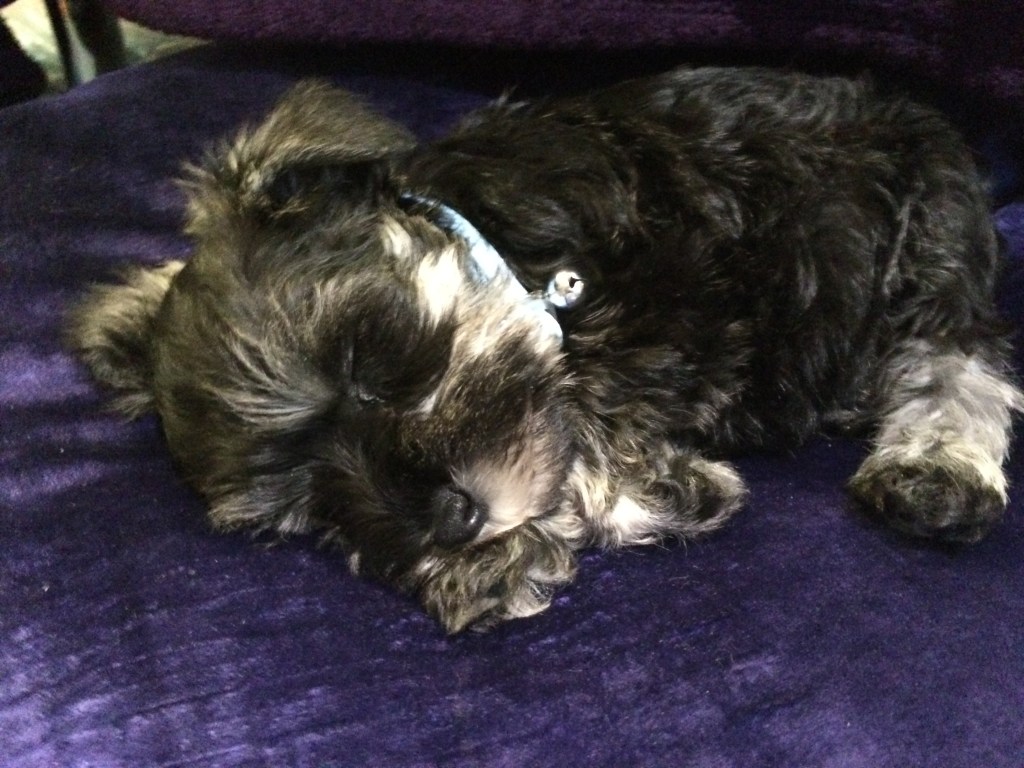
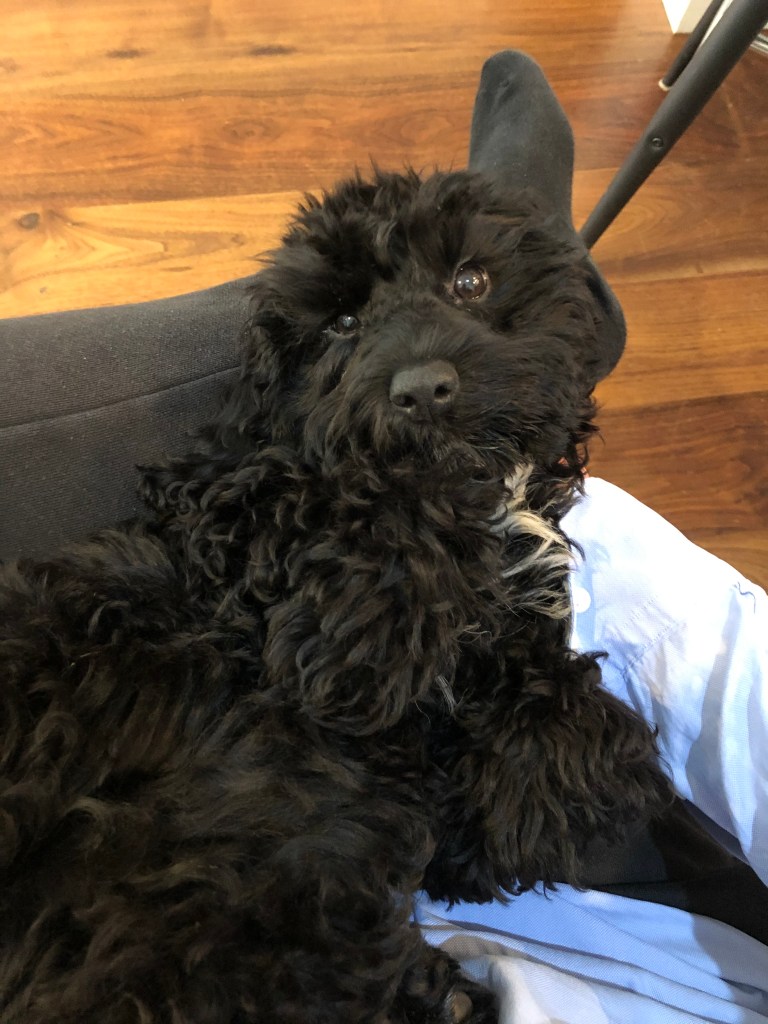
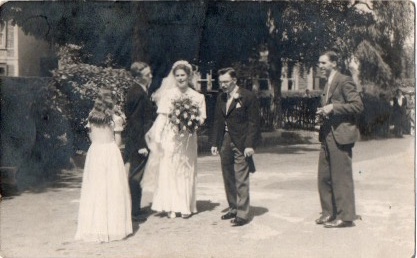
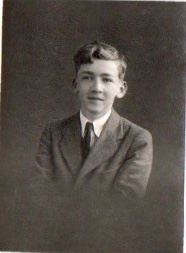
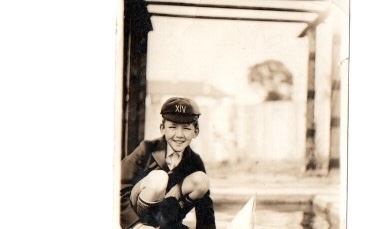
    But back to 1964 and coincidentally the big hit “I’m the One” by Gerry and the Pacemakers in February. To commemorate my birth, I added these two photos, as I can’t believe my brother Adrian wouldn’t have actually preferred a four-legged friend if he had come to know Angie or Bella: their stories will come later in the tale.

    And then there was Bella

    Unfortunately, I have only a very limited recall of my younger years – apart from a fight in the playground with a Romanian kid Nicolae N., nicknamed “nasty” at school, who had used a denigrating term about my mother. I must have been ten at the time. I told him to apologise or fight in the playground. Nicolae chose the latter. He tried to kick and scratch me. In response I just pushed him slightly into the railings. No real force and no actual damage. He still ran off to the teachers in tears. Naturally I denied all responsibility. Not surprisingly, he didn’t bother me subsequently. 

    When I look back now, I must admit to feeling some guilt. It must have been hard to be Romanian in the UK in the early 1970s when the Socialist Republic of Romania was an impoverished totalitarian country under the leader of the Romanian Communist Party and Head of State Nicolae Ceaușescu. Admittedly that psycho got his just desserts, albeit after oppressing his country and people for almost a quarter of a century.

    Around this time I was also chosen by a teacher at The Hall to play the giant in Jack and the Beanstalk – I have to assume that nobody else wanted the role. I stood high up on a ladder behind a screen – probably unimaginable in today’s climate given the evident risks. It felt surreal – and I doubt my roars and shouts scared anyone! This led me at one stage to nurture hopes of an acting career, but that didn’t play out. 

    I did, however, have success in chess at school and at a local club, entering tournaments and winning prizes. At the UK national championship I ranked 66th for the under 13 age group when 11 and felt good. However, I subsequently got the chance to play future grandmaster Nigel Short who was a year younger where I was outclassed – or to be honest, humiliated. I realised that this was another avenue where I was unlikely to make it to the top.

    The scariest event, however, was when I was chased home by a rabid Alsatian – at least that was the impression I had at the time from the excessive aggression and drooling. Luckily I was fast back then!

    We did have pets at home – hamsters, although there were one major drawback – they didn’t live long.  We did have another resident, albeit unknown for a while until mum opened the cracker box to see another four-legged creature – a little dormouse or possibly rat clearly terrified of the fate awaiting him. We carried him to Hampstead Heath which was just down the road and let him roam free there. I hope he lived to a ripe old age, but doubt it!

    Leave a comment

  • I have to apologise again as my story will have to wait a little longer. I realised recently after chats with friends (the outstanding confidence coach and special needs teacher Russell Edwards, for one – https://www.russellrkedwards.com) that I should say more about my mum, and in passing my dad. Notwithstanding the health issues that mum had to tackle herself first and foremost, she remained resilient and loving, thoughtful and caring throughout.

    She sacrificed a potential career to enable her husband to flourish and assisted him intellectually, as well as emotionally. She also provided a grounding for the children. She was always available for us.

    In addition, whenever we had friends stay over, she would not let them leave the following morning without a proper breakfast, which was more like a meal that would keep them going for the whole day. 

    I am grateful to my mum for the calm and loving atmosphere that she created. I wouldn’t be half the man I am today without that input. And I know my dad was enamoured of her until the end. After his two strokes, she cared for him in a way evocative of both her devotion and character. 

    This was no doubt the hardest time for her. Although it must have been unbearable to continue after he died. For she had dedicated her life to him and the family. And then he was gone, while the children lived abroad or had other issues to handle in the UK.

    The key problem was that my parents had been so close and focused on us and themselves that they had not kept close friends outside the family. In my dad’s case, he had also spent a considerable amount of time going out of his way to help his students, which has been reflected in their lovely comments about Ken ever since.

    And this is where I call on any readers to do their utmost to ensure that both their parents (if they are still around) and they themselves maintain a small network of friends, the people  who are dear to you. 

    However, my mum didn’t give up. She finished my dad’s last opus and then gave herself fully to charity work, taking the train regularly into town to feed the homeless. In fact she had throughout her life stopped when seeing young and older people of the streets, taking the time to talk to them and take them to a café. 

    She also built a new group of friends whom she would see regularly, including from my own friends, including a lovely Scottish lass Moira whom I had got to know through her husband Tim. She contacted me last week to ask about my news, but also to talk about the wonderful time she had spent with my mum after my dad had passed and when I wasn’t in the country (although I would come home regularly to see her). 

    I always remember fondly how we would go camping in Europe every year for a month in late July-August as my dad took time off work and my mum provided invaluable assistance to him on the journey when people still had to use maps. That would be a special month, with the joy of departure replaced by sadness when we crossed the channel back to the UK. I am grateful to them for these annual trips and for all the love and care they showed every day. I owe my mum and dad everything. 

    Leave a comment

  • I was going to start on my story, but then realised that there is still a way to go with my dad. On honeymoon my dad discovered that my mum had some health issues that her parents had opted not to disclose. However, this did not make him love her any less or seek a way out of his commitment to her. He wasn’t that kind of person. He cared for her throughout his life. 

    Don’t get me wrong here. My mum also played a vital, positive role in his life. She was similarly committed to him and was a remarkable support to him when he was paralysed after two strokes in rapid succession. I believe that they were truly very happy together. To be honest, I think my mum sacrificed a budding career by opting to dedicate herself to look after the kids. She worked for a long time as secretary on an archaeological journal and then for a long time as an editor dealing with complaints for the John Lewis magazine (John Lewis & Partners).

    Shortly after their return from Sri Lanka, my dad was appointed in 1948 as a lecturer in the history of modern India in London at the School of Oriental and African Studies (SOAS), a research university in the capital. It is in London that my parents had their first three children and after a subsequent miscarriage, that appeared to be it. The family moved to Oxford in 1963-65 where he was a reader in Indian History at St Antony’s College. 

    He loved the atmosphere there, but became embroiled in a dispute over management plans to allocate the space used by the oriental institute for a computer centre. My dad campaigned vociferously with others in the vote on this move. However, the university’s management bused in loads of people to vote on their side. Shortly afterwards SOAS advertised the post of Chair of the History of South Asia. My dad applied and was accepted. He remained in that post from October 1965 until his retirement in 1988. I personally believe that was a mistake, as he could have carried on and might thereby have lived a longer life, but he wanted to make way for the next generation.

    My dad gained some renown on two occasions. One case concerned a favourable review in The Times of his book Race, Sex and Class under the Raj, with the unforgettable headline of “Queen Victoria in the Brothel.” You will have to read the work in question to know why!

    On another instance, a hagiographic portrayal in a BBC documentary of Mahatma Gandhi as a saint was called into question by one of the few comments by my dad to be kept in the programme. My dad noted that Gandhi’s habit of proving his purity by sleeping with 13-year old virgins (and allegedly not deflowering them) didn’t prove anything at all, given that the girls were highly unlikely to speak out. 

    However, back to Oxford. My mum asked my brother Adrian if he would prefer a younger brother or a dog. Naturally he opted for the latter. Luckily for me, it was too late to change the circumstances and I saw the light of day in 1964. Adrian said he preferred me to a dog. I find it hard, but have to believe him.

    Leave a comment

  • So World War II ends in 1945, with the United Kingdom allegedly one of the victors. However, it didn’t feel like that to the returning soldiers or the population back home. Wars are expensive. The country was effectively bankrupt at the time. They also tend to have a detrimental impact on society, especially in case of bombings and the significant loss of young people. The euphoria of victory is rapidly replaced by concerns about the future.

    Winston Churchill, considered one of the major drivers of the victory, as depicted in a number of superb films, including Darkest Hour (2017) starring Gary Oldman, was unceremoniously kicked out at the elections in 1945. The country no longer needed to be on a war footing and the public in general believed that only a change of leadership and a different vision of the future could usher in the stability that the country needed. 

    The incoming government of the Labour Party, led by former Deputy Prime Minister of the coalition government Clement Atlee, won a landslide, securing a majority of 146 seats. As well as granting independence to India in 1947, it instituted a number of social reforms, creating the welfare state, with the foundation of the National Health Service and the nationalisation of the power and railway industries. Rationing introduced during the war continued until 1954. There was also a serious shortage of housing.

    Meanwhile my dad had to stay in India for another year after the end of the war for some reason.  It might have been connected to the alleged court martial. Otherwise, I can only assume that he had been kept there to assist with debriefings, facilitate the return of prisoners-of-war to Japan, and possibly other countries, and sign non-disclosure agreements. Unfortunately, to date I have been unable to obtain more details due to state secrecy. If anyone out there knows more, please write!

    Ken returned to the UK in 1946. Given the state of the country, the aforementioned rationing and housing issues, it must have been a considerable relief to return to Peterhouse, Cambridge and university life on a scholarship, with a room to stay and food of some sort, as well as a chance to recuperate and focus on studies. As I mentioned previously, my dad ended up graduating with a first in history from Cambridge. 

    More importantly, he no longer had to go it alone. One day, while studying in the library, he was drawn to a dark-haired beauty there. He asked her out for a coffee. However, the story of the actual meeting varies, depending on the narrator – my dad would always tell me that he had approached his future wife Joan, while my mum would claim to my sister Helen that she had been the instigator. Luckily for us one of them made the move! 

    My mum was also the first in her family to get to university and similarly had won a scholarship to study at Cambridge. While my dad was at the all-male college Peterhouse, my mum was at the all-female college, Girton. Well, all the colleges at Cambridge were single sex in those days. She also studied history. They had also both been born and grown up in Bristol, with my mum studying at the girl’s school Redmaids. My mum’s dad worked at a local bank all his life, while her mother was a housewife, bringing up Joan and her younger brother Michael.

    On graduation, as he embarked on a doctorate, my dad spent a year as a lecturer in Ceylon, now known as Sri Lanka, taking his wife Joan with him on a long honeymoon before they embarked on bringing four children into the world. It might have been only three and I would have remained a ghost in the machine. 

    But that, as they say, is another story.

    Leave a comment

  • In the late 1930s, tensions had been growing internationally. After Adolf Hitler was appointed Chancellor of the German Reich (otherwise known as Nazi Germany) in 1933 and assumed definitive control domestically, he turned his gaze further afield. The annexation of Austria in the Anschluss of 1938 and Sudetland in Czechoslovakia was followed shortly afterwards by the signing of the infamous non-aggression pact with the Soviet Union. All this time the British government led by Prime Minister Neville Chamberlain had adhered to a policy of appeasement in an apparent belief that this would bring lasting peace in Europe, a move which backfired spectacularly when Hitler invaded Poland in 1939 on 1 September 1939.

    This heralded the start of World War II. A believer in Europe, my dad volunteered, lying about his age in a bid to enlist. He was only seventeen. Fortunately, however, he was turned down when documentation proved that he was under age.

    So my father returned to his original goal and  took instead the entrance exams to go to Cambridge (Peterhouse, Cambridge).  He did so well that he was granted a scholarship and admitted on 19 December 1940 . He was the first person in the family to go to university.  In January 1941 he started a degree in history, known in those days as the historical tripos, split into part one (two years) and part two (one year), achieving a 1st in Classical History in both parts (the second part after the end of World War II).

    On completion of part one, my dad applied to the RAF, as he had always dreamed of being a pilot. However, this is when he had his second stroke of good fortune. It transpired that his eyesight was too bad. Given the number of brave airmen who made the ultimate sacrifice flying for Britain, this might well have been a blessing in disguise. My dad was no doubt lucky (his future kids definitely were!), although he probably didn’t feel that way at the time, and even less so during a couple of other moments in the war. 

    He was admitted to the RAF in 1942.  Initially he was deployed as a radar specialist. However, my dad had studied the classics and some Russian at school, as well as French and German. Such a background may well have prompted the British authorities to send him on an intense interpreting course in Japanese and then dispatch him to India in 1943 or 1944. I don’t have access to the exact details or dates. Owing to the Official Secrets Act, my father hardly ever talked about the war, although he did open up to me in his 60s when his health was still good. My sister Helen and I assume that he might have interrogated Japanese prisoners-of-war while in India. 

    However, he did recount one incident on a number of occasions that was to give him a number of sleepless nights, especially in the 1940s. In those days, outhouses were common in India. My dad was doing his business when a snake slithered onto his foot and stopped there for a while, presumably lost in contemplation and methodically considering its next victim. I don’t know how he did it, but my father managed to stay completely still until the serpent slid on, no doubt to cause further mischief. 

    Another event in the war might also have proved terminal. I would like to add the caveat that the evidence here is not proven. I have yet to receive a response to a request posted months ago to the UK authorities for clarification on my father’s wartime service. The subsequent text is based on what I was told by my mother after my dad had passed away. In her words my dad had stood up for another soldier who had been accused of a crime where the evidence was minimal, to say the least. I will provide here only his first name Norman.  In response to his integrity, my dad, who was to end the war as a a flight lieutenant, was allegedly court-martialled by a kangaroo court of the British army elite and sentenced to be shot.

    Such actions would be indicative of the strict command system in the army and British society in general – all the more so in countries which were at the time still British colonies – run by the upper class and any other individuals who had fortuitous connections. The army in India was definitely not organised on a merit-based system. Such inequality is still discernible today internationally in business and politics, and most explicitly in film, TV and journalism, as nepotism has flourished.  

    If this did happen, I cannot imagine his state of mind  and emotional distress, as he contemplated the sacrifice of an easy and calm life studying at Cambridge on a scholarship for the sake of his country and Europe. 

    And then a miracle happened – the end of the war was announced at the start of September 1945. So it would appear, if the story is true, that the trumped-up charges against both men were dropped. They were lucky. Unfortunately, many other brave soldiers were not.

    Notwithstanding the horrors that he had witnessed, my dad never wavered in his belief in the UK and the European dream. Overjoyed when we finally joined the EU, he was thankfully no longer around when the snake charmers Farage and Johnson employed various deceits to trigger our country’s exit.


    Although it goes without saying that I wish my parents had lived far longer. At least they found each other, for which I am eternally grateful! I will return to their story in the next instalment.

    Leave a comment

  • A short introduction. My name is Basil. I am a professional translator from Russian into English. However, as artificial intelligence and the continuing war between Russia and Ukraine are having a deleterious impact on both revenue and emotions, I have decided to deploy the extra time available to start a blog about my parents, the time I spent in France, the former USSR and various Soviet republics, as well as different periods spent back in the UK,  the current climate and possible scenarios.  

    The plan is then to move onto a review of economic and political developments in some parts of the former Soviet Union. Well, we all know about plans… I will also comment at some point on the state of the translation industry, including inherent risks and latent opportunities.  

    However, my story starts long before I appeared on this earth. This article is dedicated to my father Kenneth (shortened to Ken here). Some of the dates may be revised in a later blog entry as it is proving extremely hard to clarify data from the official authorities.

    An only child, Ken was born in November 1922 and raised in Bristol, studying at Clifton College. You have to remember that he came into this world only four years after the end of World War I when new technological developments, such as air travel, primarily available for the wealthy back then, and the rise of different forms of music such as jazz and cinema, have to be set against the deeply engrained poverty and high levels of unemployment of the time. This led to the General Strike of 1926 which lasted nine days where miners sought better pay and conditions, attracting the support of other industries. However, they were ultimately unsuccessful. 

    The early 1930s were no better, following as they did the Great Depression in the United Kingdom from 1929-1932. It had been triggered by the international Great Depression, which is generally attributed in turn to the Wall Street Crash of 1929. Fascism reared its ugly head under Oswald Mosley, but was ultimately defeated. 

    At the same time, new products were appearing and BBC Radio was entertaining the masses with a mixture of drama, news, political and religious programmes, as well as music and broadcasts for children. It was good if you had a stable job.

    Ken’s father did. He was a manager at Louis Bamberger and Sons, a firm of timber merchants. Ken’s mother didn’t work.  As you can imagine from the above, there was not much to do in the 1920s and 1930s if you weren’t into sport. And he wasn’t.  TV was relatively new, with the BBC only launching its ubiquitous service in 1936. Coverage was actually suspended throughout World War II. 

    So other than cinema, which wasn’t cheap, or the radio, music and art, books and a vivid imagination came to the fore. My dad was a voracious reader and studied hard, so much so that he finished school at the age of 17. 

    And then his future plans changed, as they did for too many people everywhere, with the coming of World War II. But that is another story…

    Leave a comment

  • Welcome to WordPress! This is your first post. Edit or delete it to take the first step in your blogging journey.